
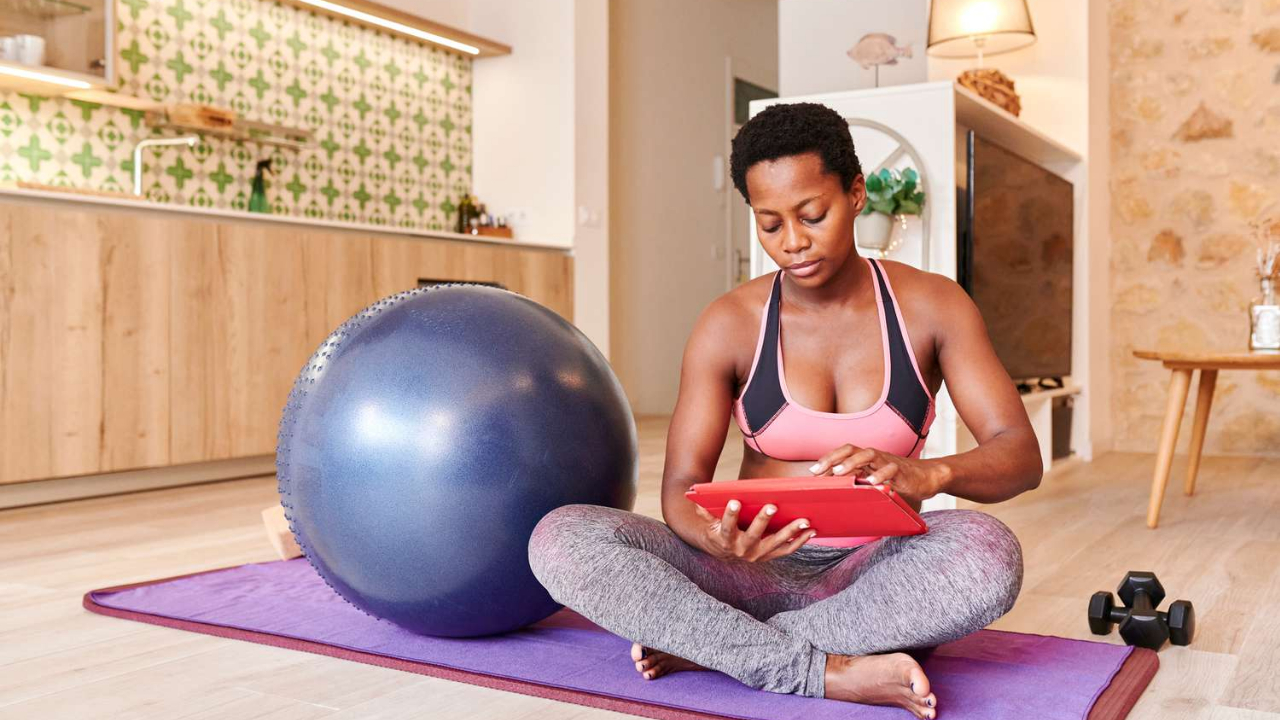
Starting a workout plan at home sounds wonderfully simple. There is no drive to the gym, no waiting for machines, and no need to organize your entire evening around a workout. You can simply clear some space, put on comfortable clothes, and get started.
Then real life happens.
Work runs late. You wake up tired. The kids need attention. A weekend plan appears unexpectedly. Before you know it, the workout you promised yourself you would complete has been pushed to tomorrow.
The problem usually is not that you lack motivation. More often, the problem is that your plan does not fit the way you actually live.
A successful home fitness routine needs to be realistic. It should work with your schedule, match your current fitness level, and leave enough room for the unexpected. Most importantly, it should be something you can continue doing after the excitement of starting has disappeared.
You do not need a huge home gym or hours of free time to make exercise a regular part of your life. A small amount of planning, some useful equipment, and a flexible approach can turn home workouts into a habit rather than another task on your to-do list.
Here is how to create a home fitness routine that can survive busy schedules, low-motivation days, and the inevitable changes that come with everyday life.
Start Your Home Fitness Routine With a Realistic Goal

Before choosing exercises or buying equipment, decide what you want your home fitness routine to accomplish.
Your goal could be building strength, improving cardiovascular fitness, increasing mobility, becoming more active, or simply creating a consistent exercise habit. Having a clear reason for working out makes it much easier to decide what belongs in your schedule.
Try to make the goal specific.
“I want to get fit” is difficult to measure. “I want to complete three workouts every week” gives you something concrete to work toward.
It is also important to start at a level that matches your current abilities. If you have not exercised regularly for months, committing to seven intense sessions a week may sound ambitious but is unlikely to be sustainable.
Instead, begin with a manageable commitment.
Three 25- or 30-minute workouts may be much more useful than planning daily hour-long sessions that you continually skip.
Your home fitness routine should challenge you, but it should also leave you feeling capable of doing it again.
Put Your Workouts on the Calendar
A flexible schedule can be one of the biggest advantages of exercising at home. However, having complete freedom over when you work out can also make postponing exercise incredibly easy.
Give your home fitness routine a specific place in your week.
Look at your normal schedule and identify times when you are realistically available. Some people prefer early mornings, while others have more energy after work or later in the evening.
There is no universally perfect workout time.
The best time is the one that fits your life consistently.
Treat your workout like an appointment. Put it on your calendar and decide in advance what you will do.
It can also help to have a backup time. If your usual workout is scheduled for Tuesday morning but something unexpected comes up, move it rather than abandoning it.
This simple approach prevents one missed session from turning into an entire week without exercise.
The more predictable your home fitness routine becomes, the less mental energy you need to spend deciding whether you should work out.
Keep the Beginning Simple
A common mistake is trying to make a new home fitness routine too complicated.
You may find dozens of exercises online, save several workout videos, create a complicated weekly split, and decide that every session needs to be completely different.
That can quickly become overwhelming.
Instead, start with a simple structure.
A workout can include a warm-up, several strength or bodyweight movements, a cardiovascular component, and a cool-down. You can adjust the details as you become more experienced.
Choose a manageable selection of exercises that train different movement patterns. Squats, lunges, push-up variations, rows, glute bridges, and core exercises can form the foundation of many general workouts.
You do not need twenty exercises in one session.
Learning a smaller group of movements also makes it easier to track progress. You can gradually increase repetitions, resistance, or difficulty as your fitness improves.
The best home fitness routine is not necessarily the most complicated one. It is the one you can understand, start quickly, and repeat consistently.
Create a Workout Space You Want to Use
You do not need a dedicated gym room to make your home fitness routine work.
A small area with enough space to move safely can be perfectly adequate for many types of exercise.
Start by clearing the floor and keeping your most frequently used equipment nearby. A mat, resistance bands, adjustable weights, or another compact piece of equipment can make the area feel ready for action.
Convenience matters more than people realize.
If you have to search through several rooms for your equipment before every workout, you create unnecessary friction. Keeping everything together removes one more reason to postpone your session.
Your workout area can also serve as a visual reminder.
Seeing your exercise mat or equipment can remind you that you planned to train. Over time, entering that space can become part of the routine itself.
The goal is not to recreate a commercial gym in your living room. Build a space that makes your home fitness routine easier to start.
Choose Equipment That Matches Your Goals
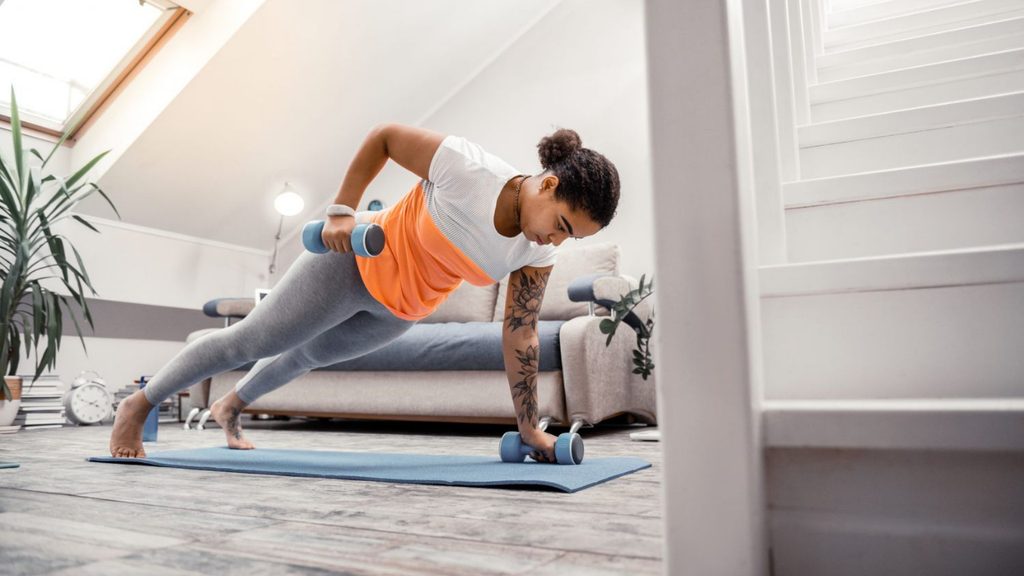
Equipment should support your home fitness routine rather than dictate it.
It is easy to see elaborate home gyms online and assume that you need multiple machines, racks, weights, and accessories. In reality, many people can accomplish a lot with a relatively small collection of versatile equipment.
Think about your goals first.
If strength training is your priority, resistance bands, dumbbells, or adjustable weights may be useful. If you enjoy cardiovascular exercise, equipment that supports cycling, rowing, walking, or another preferred activity could be worth considering.
Space is another important factor.
Someone living in a small apartment may benefit more from compact, multipurpose equipment than from a large machine that takes up a significant part of the room.
Before purchasing anything, ask yourself whether you will actually use it.
The most expensive piece of equipment is not automatically the most valuable. Equipment that you enjoy using regularly can contribute far more to your home fitness routine than something impressive that remains untouched.
Build a Balanced Weekly Plan
A strong home fitness routine should not necessarily involve the same workout every day.
Different forms of exercise can serve different purposes, and variety can make training more enjoyable.
You might dedicate certain days to strength training, include cardiovascular sessions on other days, and leave space for mobility or lighter movement.
For example, your week could include three strength sessions, one or two cardiovascular workouts, and lighter activity between them. The exact arrangement depends on your goals and experience.
Rest days are important as well.
Your body needs time to recover, especially after challenging sessions. A rest day is not wasted time. It is part of the training process.
You can also vary workout duration. A longer workout might fit comfortably into a free weekend morning, while a shorter session may be more appropriate on a busy weekday.
This flexibility keeps your home fitness routine from becoming an all-or-nothing commitment.
Instead of expecting every workout to look identical, think about what kind of movement makes sense for that particular day.
Make Your Routine Easy to Start
Convenience is one of the greatest benefits of home exercise, so take advantage of it.
Prepare your clothes before your workout. Keep your equipment accessible. Have your music ready. Decide what exercises you will perform before the workout begins.
Every small decision you remove makes starting easier.
It can also help to create different workout options.
For instance, you could have a 15-minute quick session, a 30-minute standard workout, and a longer session for days when you have more time.
That gives your home fitness routine some flexibility without removing structure.
If you only have 20 minutes, you know exactly what to do. If you have an hour, you have another option ready.
This approach is particularly useful during busy periods. Instead of thinking, “I don’t have enough time to exercise,” you can choose the version that fits the time available.
A workout does not have to be long to be worthwhile.
Use Motivation as a Bonus, Not a Requirement
Motivation feels great when it is there.
Unfortunately, it does not always show up when you need it.
Some days you will feel excited to train. Other days, sitting on the sofa will seem like a much better idea. Building your home fitness routine around motivation alone makes it vulnerable to those inevitable low-energy days.
Habits are more reliable.
Create a consistent cue that signals the beginning of your workout. You might exercise after breakfast, immediately after work, or after changing into your workout clothes.
Repeating the same sequence can gradually make exercise feel more automatic.
Music can also help create a workout mindset. So can following a structured program or tracking your completed sessions.
On difficult days, focus on beginning rather than finishing.
Tell yourself that you only need to put on your workout clothes and complete the warm-up. Once you start moving, continuing often becomes easier.
And if you genuinely need a lighter session, adjust the workout instead of abandoning your home fitness routine completely.
Track Progress in More Than One Way

Progress does not have to be measured only by the number on a scale.
Depending on your goals, you might notice that you can perform more repetitions, use greater resistance, move with better control, or complete a workout with less fatigue.
You may also feel more comfortable during everyday physical activities.
Keeping a simple workout record can make these changes easier to notice.
Write down the exercises you perform, the resistance or repetitions you use, and perhaps a quick note about how the session felt.
After several weeks, those notes can show you whether your home fitness routine is progressing.
Tracking can also reveal patterns.
You might discover that you perform better in the morning or that certain workouts leave you more tired than expected. Perhaps three sessions per week are sustainable while five are consistently difficult.
Use that information.
Your routine should be based on your real experience, not on an imaginary schedule that looks perfect on paper.
Drop the All-or-Nothing Approach
Missing a workout does not mean your home fitness routine has failed.
This is one of the most important ideas to understand if you want to exercise consistently.
Life will interfere sometimes. You might miss a session because of work, travel, family responsibilities, illness, poor sleep, or simply because you needed a day off.
The mistake is turning one missed workout into a reason to quit.
Instead, create a minimum version of your routine.
Your normal workout might take 45 minutes, but on a particularly busy day, perhaps you can complete 15 or 20 minutes.
This keeps the habit alive.
You do not need to compensate for a missed workout by exercising twice as hard the following day. Simply return to your normal schedule.
Consistency does not mean perfection.
A sustainable home fitness routine is one that gives you permission to have imperfect weeks without making you feel like you have to start over.
Progressively Make Your Workouts More Challenging
Once your home fitness routine becomes familiar, you may notice that the same workout no longer feels as difficult.
That is a normal part of improving fitness.
When an exercise becomes comfortable, you can gradually introduce more challenge. Depending on the movement and your goals, that might mean increasing resistance, performing additional repetitions, adding a set, extending the duration, or choosing a more difficult variation.
The key is gradual progression.
You do not need to make every workout harder than the previous one.
Small improvements can add up over time.
Keeping a record of your workouts makes progression easier because you can see what you have previously completed.
For example, if you have been performing a particular movement with the same resistance for several weeks and it now feels relatively easy, you may be ready to make a modest adjustment.
A home fitness routine should grow with you.
The goal is to keep challenging yourself appropriately without turning every workout into an exhausting test.
Give Recovery a Place in Your Plan
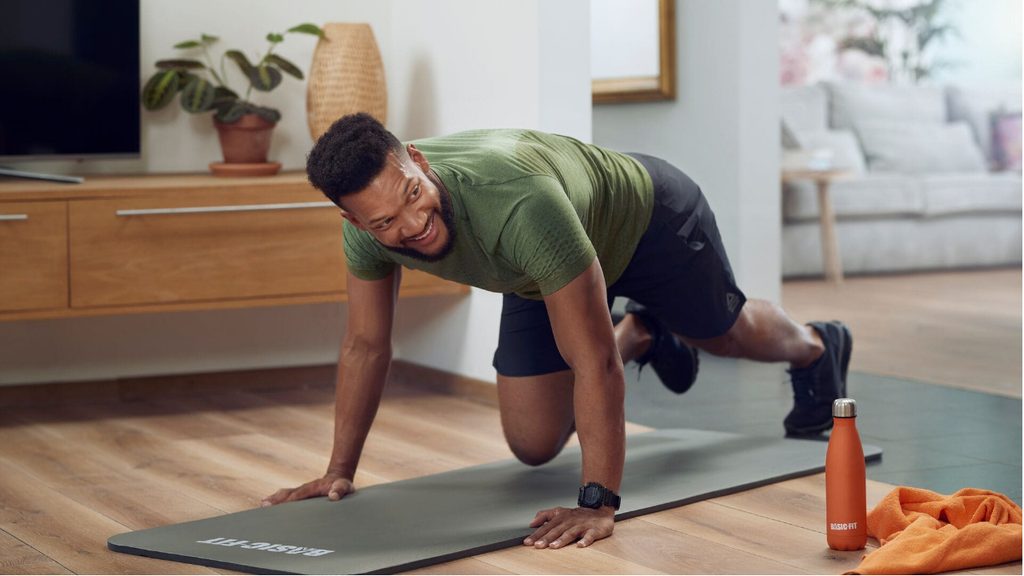
Exercise is only one part of a successful home fitness routine.
Recovery matters too.
Sleep, nutrition, hydration, rest days, and sensible training volume all influence how well you can continue exercising.
If every workout leaves you completely exhausted, your plan may be too demanding.
Listen to your body and distinguish normal exercise fatigue from pain or other symptoms that concern you. If you experience unusual or persistent pain, stop the activity and seek appropriate professional advice.
Recovery does not necessarily mean sitting still all day.
A gentle walk, light stretching, or mobility session can provide a lower-intensity alternative when appropriate.
The important thing is not to treat every day as an opportunity to push harder.
A balanced home fitness routine includes periods when you challenge yourself and periods when you allow your body to recover.
That balance can make it easier to remain active over the long term.
Add Accountability to Your Home Fitness Routine
Exercising at home can sometimes make skipping a workout too easy.
There is no trainer waiting for you. No class has started without you. Nobody knows that you planned to exercise at 6 p.m.
Adding some form of accountability can help.
Tell a friend about your weekly goals. Exercise with a family member. Join a virtual fitness group. Follow a structured program. Even something as simple as marking completed workouts on a calendar can make a difference.
You can also set weekly goals rather than focusing entirely on distant results.
Instead of thinking about where you want to be six months from now, concentrate on completing three workouts this week.
Once that becomes normal, repeat it.
Your home fitness routine does not have to be a solitary experience. Sharing progress or working out with someone else can make exercise more enjoyable and give you another reason to show up.
Accountability should feel supportive, not stressful.
Adjust Your Plan as Your Life Changes
A home fitness routine should not be carved in stone.
Your schedule will change. Your fitness level will change. Your interests may change too.
Perhaps you discover that you love strength training but dislike long cardio sessions. Maybe mornings become impossible because your work schedule changes. Or perhaps you have more time available on weekends than you originally expected.
Adjust your plan accordingly.
Every few weeks, take a moment to evaluate your routine.
Ask yourself which workouts you enjoy, which sessions you regularly skip, whether the schedule is realistic, and whether your current goals still make sense.
If Tuesday evenings never work, move the workout.
If an hour-long session is consistently interrupted, make it shorter.
If boredom is creeping in, introduce a new activity.
The flexibility of a home fitness routine is one of its biggest strengths. You can change your plan without changing your overall commitment to staying active.
The routine should serve your life rather than control it.
Make Consistency the Main Goal
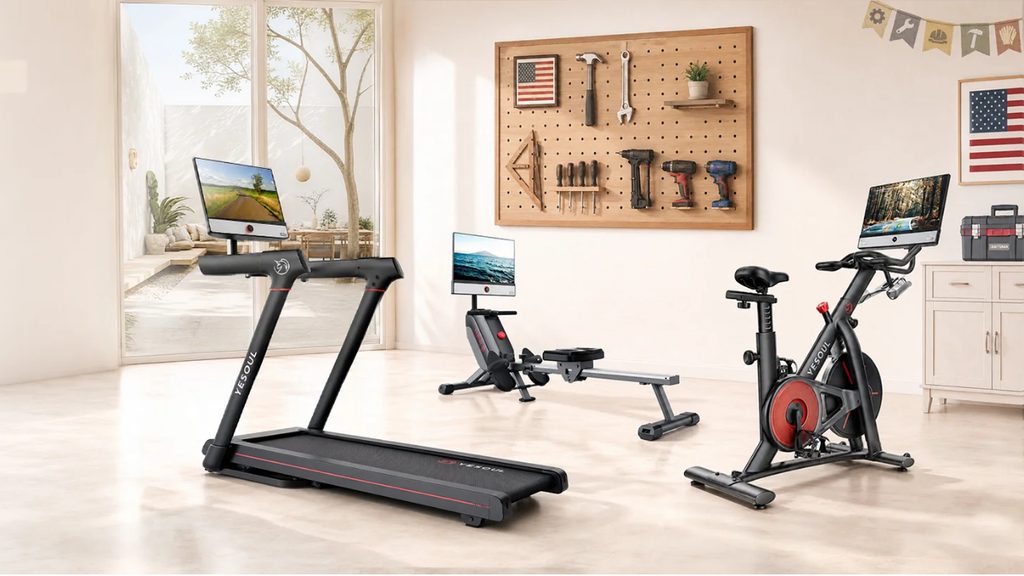
A lasting home fitness routine is built through ordinary decisions.
It is the workout you complete when you are not particularly excited. It is the short session you fit into a busy afternoon. It is the decision to return after missing several days.
Those moments may not feel important at the time, but they are what create a lasting habit.
You do not need a perfect plan.
Start with realistic goals, establish a schedule, create a convenient workout space, and choose equipment that supports the activities you actually enjoy. Track your progress and make adjustments when your circumstances change.
Most importantly, give yourself room to be human.
A home fitness routine does not need to look impressive online. It needs to work in your real life.
As your routine develops, the right equipment can make training more convenient and enjoyable. The Yesoul Fitness store is one option for exploring equipment that can support different types of home workouts. When you are ready to shop, Eva’s Hike provides 100% verified Yesoul Fitness coupon codes, helping you save on purchases from the Yesoul Fitness store while building a home setup that makes staying active easier.