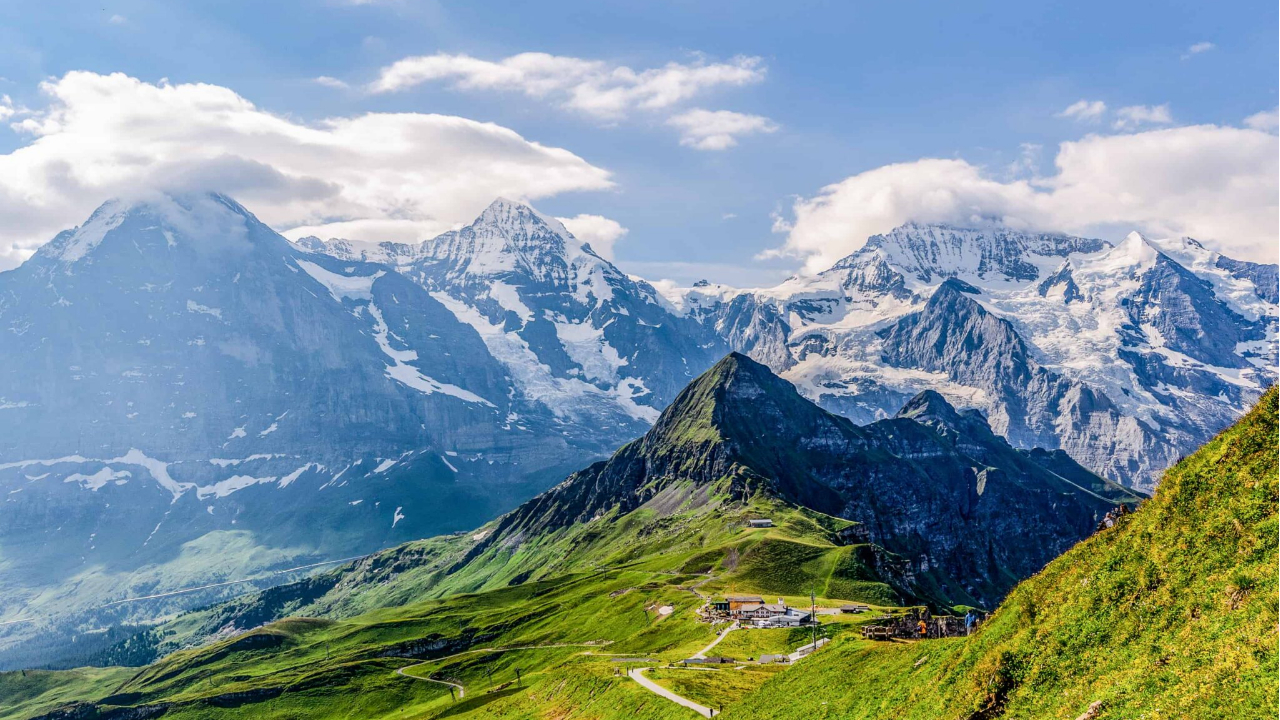
Jungfrau Region is one of Switzerland’s most breathtaking destinations, combining towering Alpine peaks, peaceful mountain villages, dramatic waterfalls, glaciers, scenic railways, green meadows, and unforgettable panoramic viewpoints. Located in the Bernese Oberland, this spectacular part of Switzerland attracts travelers looking for outdoor adventures, relaxing escapes, photography opportunities, and classic Alpine scenery.
What makes the Jungfrau Region particularly special is its incredible variety. Visitors can explore the waterfalls of Lauterbrunnen in the morning, walk through the charming streets of Wengen or Mürren, ride a mountain railway toward the high Alps, and finish the day surrounded by spectacular views of the Eiger, Mönch, and Jungfrau.
The destination is also remarkably accessible. You do not need to be an experienced mountaineer to enjoy the mountains. Trains, cable cars, gondolas, and mountain railways connect many of the region’s most impressive attractions, allowing travelers to experience high-altitude landscapes without completing difficult climbs.
For hikers, the Jungfrau Region provides countless trails through forests, meadows, valleys, and mountain landscapes. Winter visitors can enjoy skiing, snowboarding, sledging, and snowy walking paths, while summer brings opportunities for hiking, cycling, sightseeing, and exploring Alpine villages.
Whether you are planning your first trip to Switzerland or returning for another Alpine adventure, the Jungfrau Region offers an extraordinary combination of natural beauty, outdoor activities, and traditional Swiss culture.
Why Visit the Jungfrau Region?

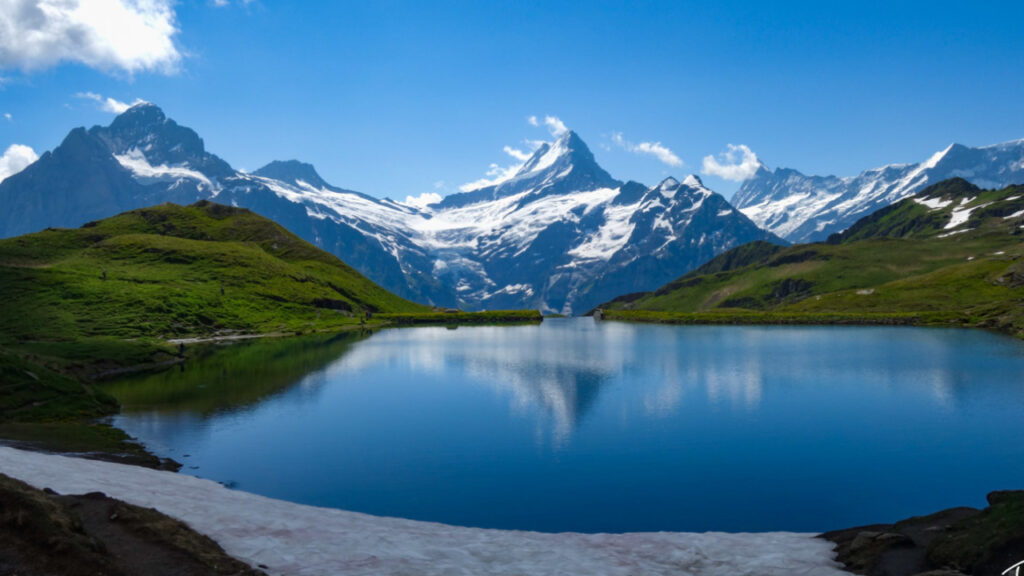
There are many reasons to include the Jungfrau Region in a Switzerland itinerary.
The destination brings together several experiences that travelers often associate with the Swiss Alps. Instead of visiting one mountain attraction, you can explore an entire network of valleys, villages, viewpoints, hiking routes, and transportation connections.
The area is particularly appealing because it offers something for different types of travelers.
Adventure seekers can hike and explore mountain trails. Families can enjoy scenic railways and accessible viewpoints. Photographers can capture waterfalls, peaks, lakes, and traditional villages. Travelers looking for relaxation can stay in peaceful mountain communities and enjoy the scenery without following a packed schedule.
Some of the highlights include:
- Lauterbrunnen Valley
- Grindelwald
- Wengen
- Mürren
- Jungfraujoch
- Kleine Scheidegg
- Grindelwald First
- Schilthorn
- Schynige Platte
- Eiger, Mönch, and Jungfrau views
The combination of these attractions makes the Jungfrau Region much more than a single sightseeing destination.
Explore Lauterbrunnen Valley
Lauterbrunnen Valley is one of the most recognizable landscapes in the Swiss Alps and a must-see destination in the Jungfrau Region.
The valley is surrounded by enormous limestone cliffs, green meadows, traditional houses, and numerous waterfalls. The dramatic scenery creates a powerful contrast between the peaceful valley floor and the towering mountains surrounding it.
One of the most famous landmarks is Staubbach Falls. The waterfall plunges dramatically from the cliffs above Lauterbrunnen and has become one of the area’s most photographed natural attractions.
The valley is also home to Mürrenbach Falls, which can be seen from the Lauterbrunnen area and surrounding viewpoints.
A simple walk through the valley provides a wonderful introduction to the landscape. You do not necessarily need a demanding hike to appreciate the scenery. The valley floor offers beautiful views of the surrounding cliffs and waterfalls, making it particularly appealing for families and travelers with limited hiking experience.
Lauterbrunnen is also an important transportation point for reaching Wengen, Mürren, and other destinations.
For first-time visitors, spending several hours exploring the valley is an excellent way to begin discovering the Jungfrau Region.
Discover the Mountain Village of Wengen
Wengen is one of the most charming villages in the Jungfrau Region.
Located above Lauterbrunnen Valley, Wengen offers spectacular views while maintaining the atmosphere of a traditional Swiss mountain village. The village is known for being car-free, creating a quieter environment where visitors can enjoy walking through the streets without the constant presence of traffic.
During summer, Wengen becomes a popular base for hiking and sightseeing.
Numerous paths lead into the surrounding mountains, providing opportunities to enjoy panoramic views of the valley and surrounding peaks.
Winter transforms Wengen into a snowy mountain destination. Skiers and snowboarders can access the surrounding slopes, while visitors who prefer a slower pace can enjoy winter walks and the peaceful atmosphere of the village.
One of the greatest advantages of staying in Wengen is its location. You can experience the beauty of a mountain village while remaining connected to the wider transportation network.
For travelers who want a classic Swiss Alpine experience, Wengen is difficult to overlook.
Experience the Beauty of Mürren
Mürren is another remarkable mountain village in the Jungfrau Region.
Like Wengen, Mürren is car-free, which contributes to its peaceful atmosphere. The village sits high above Lauterbrunnen Valley and provides dramatic views toward the surrounding mountains.
Traditional wooden buildings, flower-filled balconies, narrow paths, and towering peaks create an unmistakably Alpine atmosphere.
Mürren is also an important starting point for visiting Schilthorn.
Travelers can combine a visit to the village with a mountain excursion, hiking route, or scenic cable-car journey.
The village is particularly beautiful during summer when surrounding meadows become green and colorful. In winter, snow transforms the landscape into a postcard-like Alpine scene.
For photographers, Mürren offers countless compositions because the combination of architecture and mountains creates visual interest in almost every direction.
Spending a night here can also provide a more peaceful experience than visiting only as a day trip.
Take the Journey to Jungfraujoch
Jungfraujoch is one of the most famous attractions in the Jungfrau Region and one of the highest accessible destinations in Switzerland.
Known as the “Top of Europe,” Jungfraujoch reaches an elevation of approximately 3,454 meters above sea level. The destination is home to Europe’s highest railway station and provides access to spectacular high-Alpine scenery.
The journey to Jungfraujoch is an experience in itself.
The railway travels through dramatic mountain landscapes, eventually reaching the high-altitude station between the Mönch and Jungfrau peaks.
At the top, visitors can explore several attractions and viewpoints.
The Sphinx observation deck provides panoramic views over the surrounding mountains and the Aletsch Glacier. The Ice Palace offers an underground experience featuring ice tunnels and sculptures.
There is also an Alpine plateau where visitors can experience the high-mountain environment directly.
Because the elevation is significant, conditions can be dramatically different from those in the valley. A sunny day in Lauterbrunnen does not necessarily mean warm weather at Jungfraujoch.
Visitors should bring warm layers, suitable footwear, sunglasses, and sun protection.
The high altitude also means it is important to move at a comfortable pace and pay attention to how your body feels.
For many visitors, Jungfraujoch becomes one of the defining memories of their trip to the Jungfrau Region.
See the Eiger, Mönch, and Jungfrau
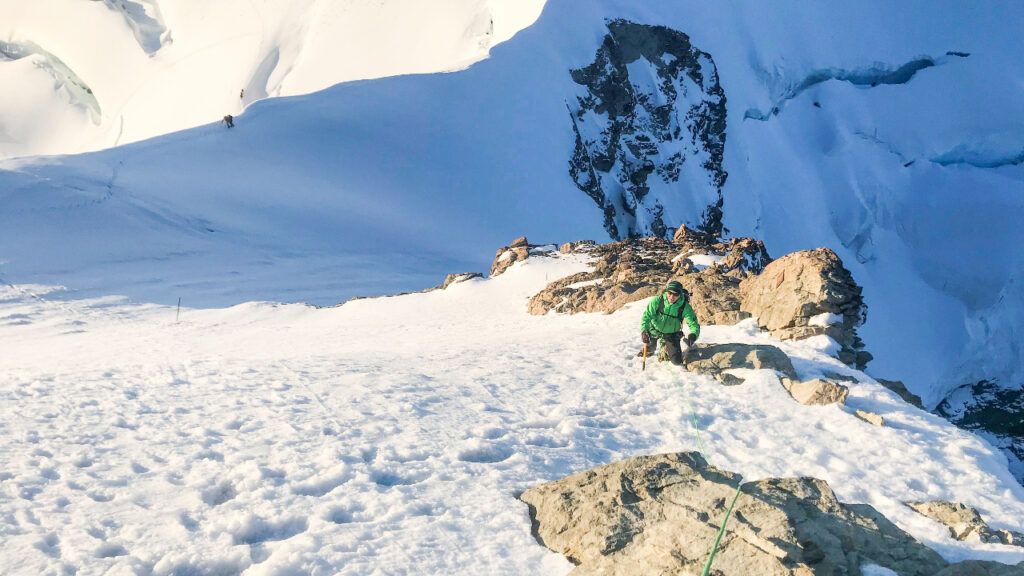
The three peaks of Eiger, Mönch, and Jungfrau form the dramatic mountain skyline that defines much of the Jungfrau Region.
These mountains can be viewed from numerous locations throughout the area.
The Eiger is particularly famous for its imposing north face, which has a long history in the world of mountaineering.
The Mönch stands between the Eiger and Jungfrau, while the Jungfrau forms another dominant part of the surrounding landscape.
You do not need to climb any of these mountains to appreciate them.
In fact, some of the most memorable views come from villages and mountain paths below the peaks.
Grindelwald, Wengen, Kleine Scheidegg, and other viewpoints offer opportunities to see the mountains from different perspectives.
Weather and lighting can completely change their appearance.
On a clear morning, the peaks may appear sharply defined against a blue sky. Clouds can later create a dramatic atmosphere around the mountain faces.
This constantly changing scenery is one reason photographers enjoy spending several days in the Jungfrau Region.
Visit Grindelwald
Grindelwald is one of the largest and most popular destinations in the Jungfrau Region.
Surrounded by impressive mountains, the village provides easy access to a wide range of activities.
Grindelwald is especially popular with travelers who want a convenient base for exploring the surrounding mountains.
The village itself offers restaurants, accommodation, shops, and transportation connections.
From Grindelwald, visitors can travel toward destinations such as First and the Eiger Glacier.
Summer visitors can enjoy hiking and mountain activities, while winter travelers can explore skiing and snow-covered landscapes.
One of the advantages of Grindelwald is the variety of experiences available without requiring extensive travel.
You can spend one day hiking and another taking a scenic mountain railway.
The village is also surrounded by some of the most impressive landscapes in the Swiss Alps, making it an excellent destination for photography.
Ride the Eiger Express
The Eiger Express has become an important part of transportation through the Jungfrau Region.
The modern tricable gondola connects Grindelwald Terminal with the Eiger Glacier area, offering a fast and scenic way to reach the mountains.
The journey itself provides excellent views.
As the gondola rises, the landscape changes from the valley environment to increasingly dramatic mountain scenery.
For travelers with limited time, efficient mountain transportation can make a major difference.
Instead of spending a large portion of the day hiking uphill, you can use the gondola to reach higher elevations and then explore the mountains on foot.
This combination of transportation and hiking is one of the most convenient ways to experience the Jungfrau Region.
It also gives visitors greater flexibility when planning their day.
Explore Grindelwald First
Grindelwald First is another popular mountain destination.
Located above Grindelwald, First provides access to panoramic mountain scenery and several outdoor activities.
During summer, visitors can explore walking trails and enjoy views across the surrounding mountains.
The area is especially attractive to travelers who want a combination of sightseeing and adventure.
A mountain excursion to First can easily be combined with time in Grindelwald, allowing visitors to experience both the village and higher Alpine landscapes in the same day.
The views are particularly impressive on clear days.
From elevated viewpoints, the surrounding valleys and peaks appear to stretch far into the distance.
Travelers should remember that mountain conditions can change quickly, so it is sensible to check weather and operating conditions before heading up.
Experience Schilthorn and Piz Gloria
Schilthorn provides another high-altitude experience in the Jungfrau Region.
The mountain is famous for its panoramic views toward the major peaks of the Bernese Oberland.
At the summit is Piz Gloria, a revolving restaurant that provides visitors with changing views as the building slowly rotates.
The journey to Schilthorn can also be part of the adventure, particularly for visitors traveling from Mürren.
The surrounding mountain landscape offers opportunities for photography, sightseeing, and hiking depending on the season and conditions.
Because the summit sits at a considerable elevation, visitors should prepare for colder and potentially changing weather.
Schilthorn is a good choice for travelers who want a panoramic mountain experience that feels different from Jungfraujoch.
Hike Through the Jungfrau Region
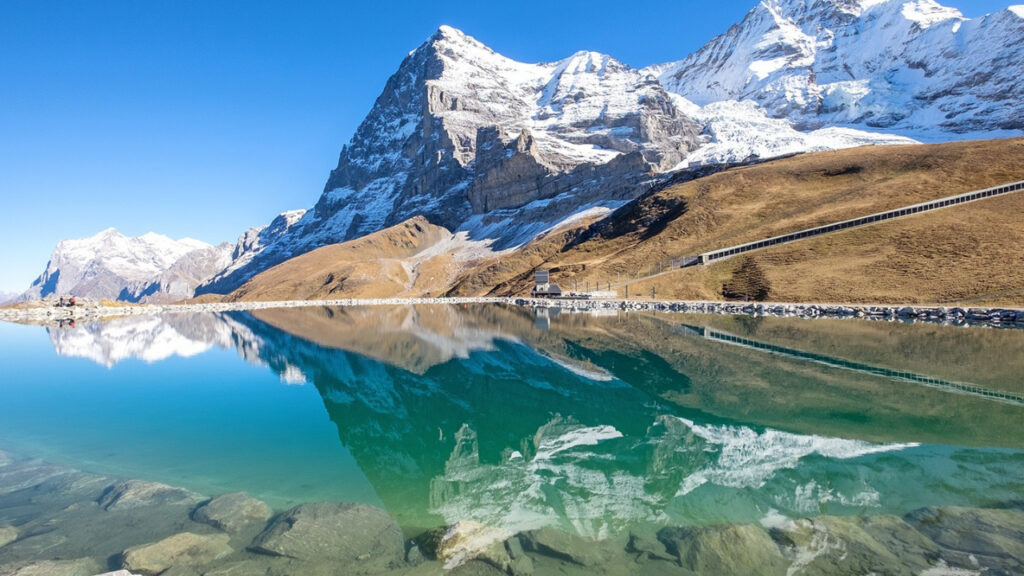
Hiking is one of the best ways to experience the area at a slower pace.
The Jungfrau Region contains an extensive network of hiking paths, ranging from relatively easy walks to challenging mountain routes.
Summer is particularly popular because snow recedes from many lower and mid-elevation paths, allowing travelers to explore meadows, forests, valleys, and mountain viewpoints.
Popular hiking areas include:
- Lauterbrunnen
- Wengen
- Mürren
- Grindelwald
- First
- Kleine Scheidegg
- Schynige Platte
One advantage of hiking here is the ability to combine walking with mountain transportation.
You can take a train or cable car to a higher point, complete a scenic route, and then use transportation to return.
This approach allows travelers to enjoy spectacular scenery without necessarily committing to a long uphill climb.
Before starting any route, check current trail conditions, weather forecasts, elevation, distance, and estimated hiking time.
Mountain trails should always be approached according to current conditions rather than simply relying on photographs or descriptions found online.
Visit Kleine Scheidegg
Kleine Scheidegg is an important mountain pass and transportation hub between Wengen and Grindelwald.
It is also one of the best places to appreciate the surrounding mountain scenery.
From Kleine Scheidegg, visitors can enjoy impressive views toward the Eiger, Mönch, and Jungfrau.
The location is particularly popular with hikers because several mountain routes pass through the area.
It is also an excellent place to pause during a railway journey.
The combination of trains, mountain scenery, hiking paths, and restaurants makes Kleine Scheidegg a convenient stop for visitors exploring the Jungfrau Region.
In winter, the surrounding landscape becomes a snowy destination for skiing and other mountain activities.
Discover Schynige Platte
Schynige Platte offers another memorable mountain excursion.
The destination is reached by a historic mountain railway and provides impressive views toward the surrounding Alpine landscape.
The area is known for its panoramic scenery and walking opportunities.
Visitors can explore the mountain environment without necessarily undertaking a demanding expedition.
Schynige Platte is particularly attractive for travelers who enjoy scenic transportation.
The journey to the mountain is part of the attraction, while the destination provides an opportunity to walk, photograph the landscape, and enjoy panoramic views.
Adding Schynige Platte to a longer itinerary can also provide a different perspective of the mountains compared with destinations such as Grindelwald or Lauterbrunnen.
Best Hiking Experiences
The hiking opportunities across the Jungfrau Region are incredibly diverse.
A traveler looking for an easy walk can choose a relatively short valley or village route.
Someone seeking panoramic scenery can select a mountain trail connecting viewpoints.
More experienced hikers can explore longer and more demanding routes, provided they have the necessary preparation and current conditions are suitable.
Some hiking experiences are especially appealing because they combine several attractions.
For example, a route might begin near a mountain railway station, pass through Alpine meadows, provide views of major peaks, and finish near a traditional village.
This makes hiking more than simply physical exercise.
It becomes a way to experience the landscape, architecture, wildlife, and changing atmosphere of the mountains.
Always stay on marked paths and respect local guidance.
Best Time to Visit the Jungfrau Region
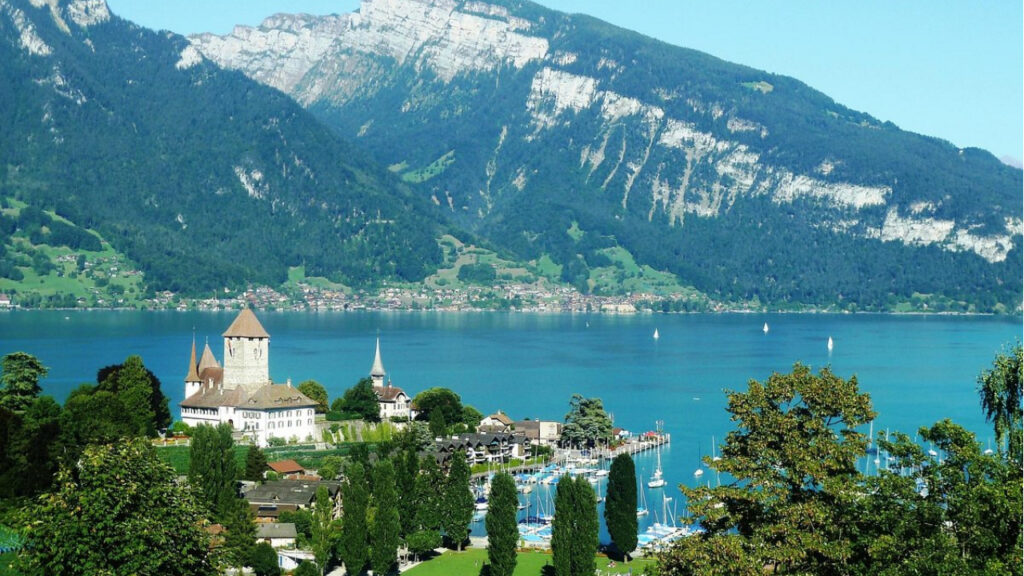
The best time to visit depends on the experiences you want.
Summer
Summer is ideal for hiking, sightseeing, photography, and exploring Alpine villages.
Green meadows and longer daylight hours make it easier to plan full days outdoors.
Autumn
Autumn can bring beautiful colors and a quieter atmosphere.
Lower visitor numbers can make some areas feel more peaceful, although weather conditions can become less predictable.
Winter
Winter transforms the Jungfrau Region into a snowy destination.
Skiing, snowboarding, sledging, winter walking, and snowshoeing become major attractions.
Villages such as Wengen, Mürren, and Grindelwald take on a completely different appearance beneath the snow.
Spring
Spring can be an interesting time to visit, particularly in lower valleys.
However, higher elevations may still have significant snow, and some hiking routes may not yet be ready for summer conditions.
Always check local information before planning high-altitude activities.
How Many Days Do You Need?
A short visit can introduce you to the highlights, but staying longer allows you to experience the Jungfrau Region at a more relaxed pace.
A three-day trip could include Lauterbrunnen and Wengen on the first day, Grindelwald and First on the second, and Jungfraujoch on the third.
With four or five days, you could add Mürren, Schilthorn, Kleine Scheidegg, Schynige Platte, or additional hiking routes.
A longer stay also provides flexibility.
Mountain weather can change quickly, and having extra days means you are less likely to miss major viewpoints because of clouds or poor visibility.
Instead of trying to see everything in a single day, give yourself time to slow down and enjoy the landscape.
Getting Around the Jungfrau Region
One of the strongest advantages of the Jungfrau Region is its transportation network.
Trains, cable cars, gondolas, and mountain railways connect many important destinations.
This allows travelers to create flexible itineraries without relying heavily on a private vehicle.
The area is particularly convenient for travelers who want to combine sightseeing with hiking.
For example, you can travel uphill by railway, explore a mountain route, and return using another transportation connection.
Before purchasing tickets, compare the journeys you plan to make with available regional passes.
Transportation costs can add up quickly, especially when visiting multiple mountain destinations.
Planning ahead can help you understand which ticket or pass makes the most sense for your itinerary.
Where to Stay
Choosing the right base can significantly affect your experience.
Grindelwald is a convenient choice for travelers who want plenty of accommodation, restaurants, shops, and transportation connections.
Lauterbrunnen is ideal for people who want to stay in the valley beneath the surrounding cliffs and waterfalls.
Wengen is better suited to travelers who prefer a peaceful mountain village.
Mürren is another excellent option for visitors seeking a high-altitude village atmosphere and spectacular views.
Interlaken can also work well as a broader base for exploring the Bernese Oberland.
The best choice depends on your itinerary, budget, transportation plans, and preferred atmosphere.
Visiting with Family
The Jungfrau Region can be an excellent destination for families because travelers do not have to rely exclusively on demanding hikes.
Mountain railways and cable cars allow families to reach scenic locations relatively easily.
Children may particularly enjoy:
- Scenic train journeys
- Waterfalls
- Mountain viewpoints
- Cable cars
- Snow activities
- Alpine villages
- Easy walking trails
Families should still plan according to the age and abilities of their children.
High-altitude locations can be cold and windy, even during summer, so appropriate clothing is important.
Shorter activities can also be better than trying to fill every day with long excursions.
Photography in the Jungfrau Region
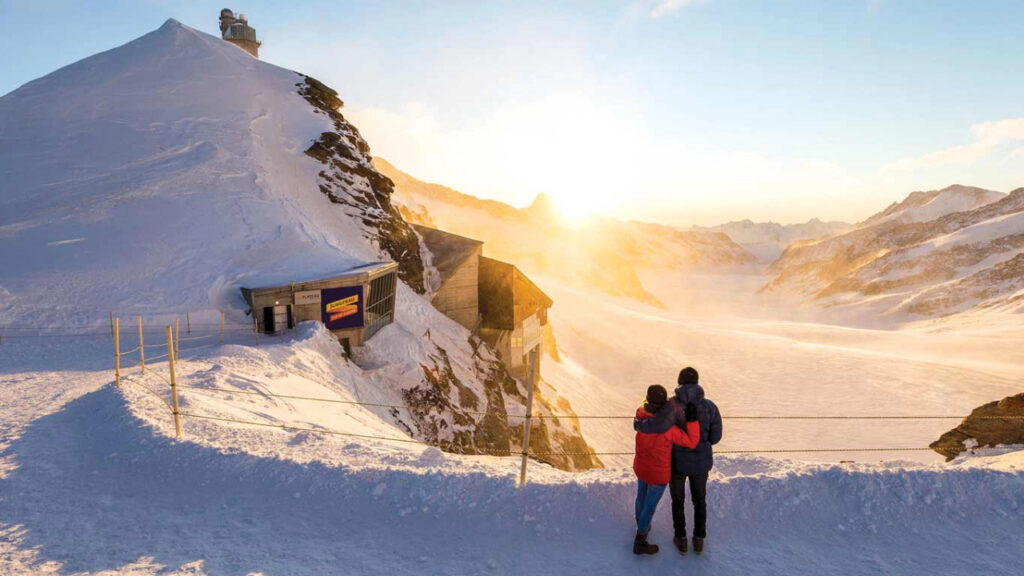
Photography is one of the biggest attractions for many visitors.
The Jungfrau Region provides an enormous variety of landscapes within a relatively small area.
Photographers can capture:
- Mountain peaks
- Waterfalls
- Alpine meadows
- Traditional villages
- Mountain railways
- Glaciers
- Snowy landscapes
- Scenic valleys
Lauterbrunnen is particularly impressive for waterfall photography.
Wengen and Mürren offer opportunities to combine traditional village architecture with mountain backgrounds.
Grindelwald provides dramatic views toward the surrounding peaks.
High-altitude viewpoints can reveal enormous landscapes that are difficult to capture from the valley.
Morning and evening light can be particularly beautiful, but changing weather can create equally dramatic images during the middle of the day.
What to Pack
Your packing list should depend on the season and activities.
For summer hiking, consider bringing:
- Comfortable hiking shoes
- Lightweight layers
- Waterproof jacket
- Sunglasses
- Sunscreen
- Reusable water bottle
- Small backpack
- Basic snacks
For winter trips, you will need significantly warmer clothing and footwear appropriate for snow and cold temperatures.
Even during summer, high-altitude destinations such as Jungfraujoch can be cold.
The most important principle is to prepare for changing conditions.
Weather in the mountains can be very different from conditions in the valley, so checking the forecast for your specific destination is more useful than checking only the general weather for Switzerland.
Responsible Travel in the Jungfrau Region
The beauty of the Jungfrau Region also means that responsible tourism is essential.
Visitors should make an effort to protect the environment and respect local communities.
Simple actions include staying on marked trails, avoiding litter, respecting wildlife, and following local signs.
Do not pick wildflowers or disturb animals for photographs.
Keep noise levels reasonable, particularly in peaceful mountain villages and natural areas.
Travelers should also remember that mountain environments are fragile.
Large numbers of visitors can place pressure on trails, vegetation, waste systems, and local communities.
Responsible travel helps ensure that future visitors can enjoy the same landscapes.
Is the Jungfrau Region Worth Visiting?
For most travelers, the answer is yes.
The destination combines many of Switzerland’s most iconic experiences in one area.
You can explore a dramatic valley, visit a traditional mountain village, ride a historic railway, see glaciers, hike through Alpine meadows, and stand beneath some of Europe’s most famous peaks.
The biggest advantage is flexibility.
You can design a relaxing itinerary focused on sightseeing or create a more active trip centered around hiking and outdoor adventures.
You can also combine both approaches.
This makes the Jungfrau Region suitable for couples, families, solo travelers, photographers, hikers, and first-time visitors to Switzerland.
Final Thoughts on the Jungfrau Region
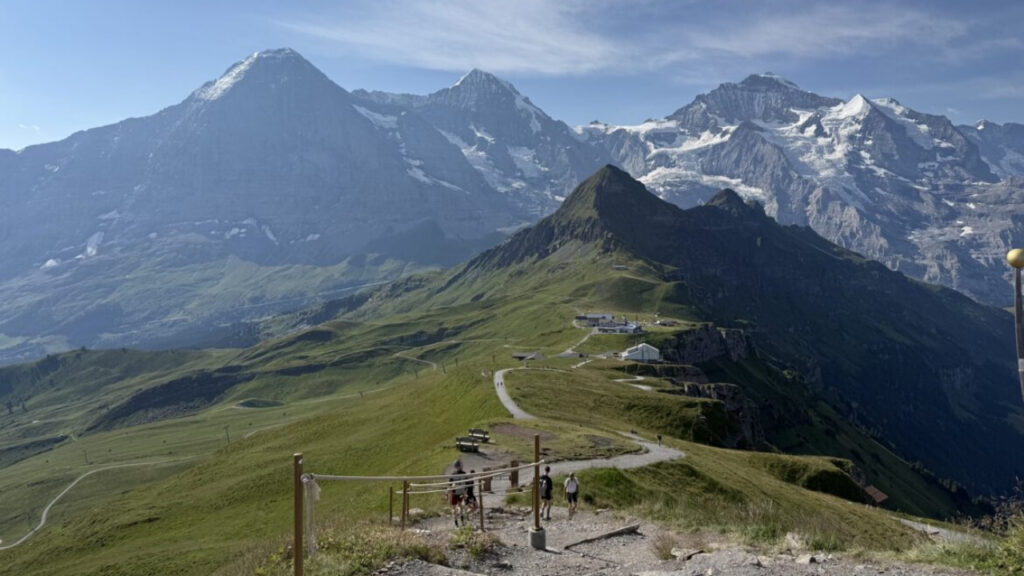
Jungfrau Region is an extraordinary destination for anyone who wants to experience the Swiss Alps.
From the waterfalls of Lauterbrunnen and the peaceful villages of Wengen and Mürren to the dramatic mountains surrounding Grindelwald and the high-altitude attractions of Jungfraujoch, the area offers an impressive collection of experiences.
What makes the destination especially memorable is not simply the number of attractions. It is the way they connect.
A scenic train can take you toward a mountain trail. A short walk can lead to a spectacular viewpoint. A village can become the starting point for a high-Alpine adventure. A waterfall can appear around the corner while walking through a peaceful valley.
Whether you visit during the green landscapes of summer or the snowy atmosphere of winter, the mountains provide a constantly changing backdrop.
Plan your itinerary around the experiences that interest you most, allow some flexibility for mountain weather, and avoid trying to see everything too quickly.
The best way to experience the Jungfrau Region is to give yourself enough time to slow down, explore, and appreciate the scenery.