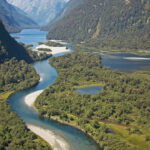
Tongariro National Park is one of New Zealand’s most remarkable destinations, combining volcanic mountains, colorful crater lakes, ancient lava flows, alpine valleys, native forests, waterfalls, and extraordinary cultural history. Located in the central North Island, the park is home to three major volcanic mountains: Tongariro, Ngāuruhoe, and Ruapehu.
For many travelers, the biggest attraction is the famous Tongariro Alpine Crossing. The 19.4-kilometre route travels through an exposed volcanic landscape and passes dramatic features including South Crater, Red Crater, the Emerald Lakes, and Blue Lake. However, the wider Tongariro National Park offers far more than one famous hike.
Shorter walks, waterfalls, alpine viewpoints, forests, and other trails make the area suitable for visitors with different interests and abilities. At the same time, the park has deep cultural importance for Māori, particularly the iwi and hapū connected with the sacred mountains.
The landscape also continues to change. Volcanic activity, weather, erosion, vegetation, and recent fires have all played a role in shaping the environment. In 2025, major fires affected significant areas of the park, and visitors are now asked to respect the ongoing restoration of affected areas.
Whether you are planning a challenging hike or simply want to experience one of New Zealand’s most unusual landscapes, Tongariro National Park has plenty to offer.
1. Tongariro National Park Has an Incredible Volcanic Landscape
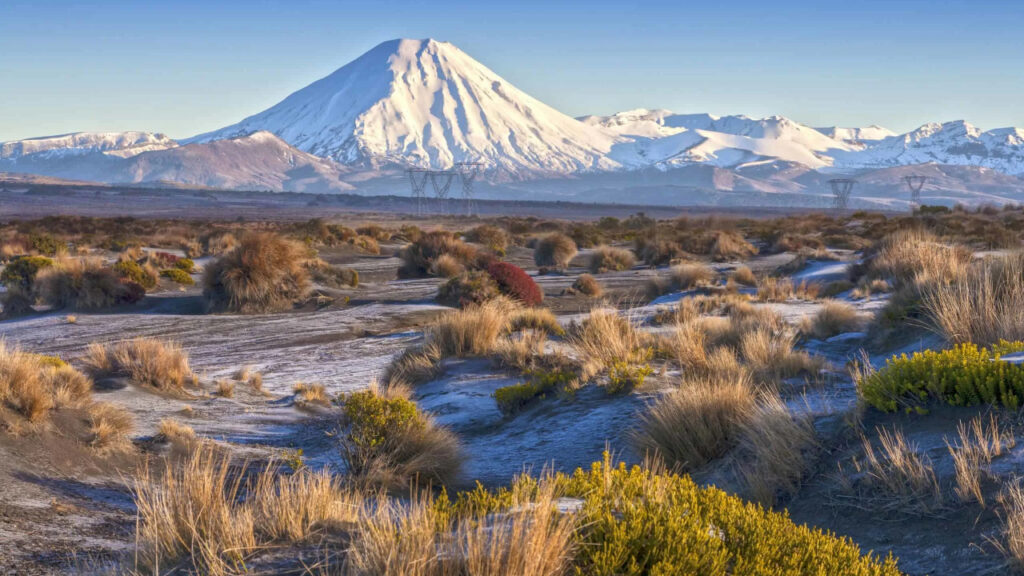
The volcanic landscape is one of the main reasons Tongariro National Park stands out from other destinations in New Zealand.
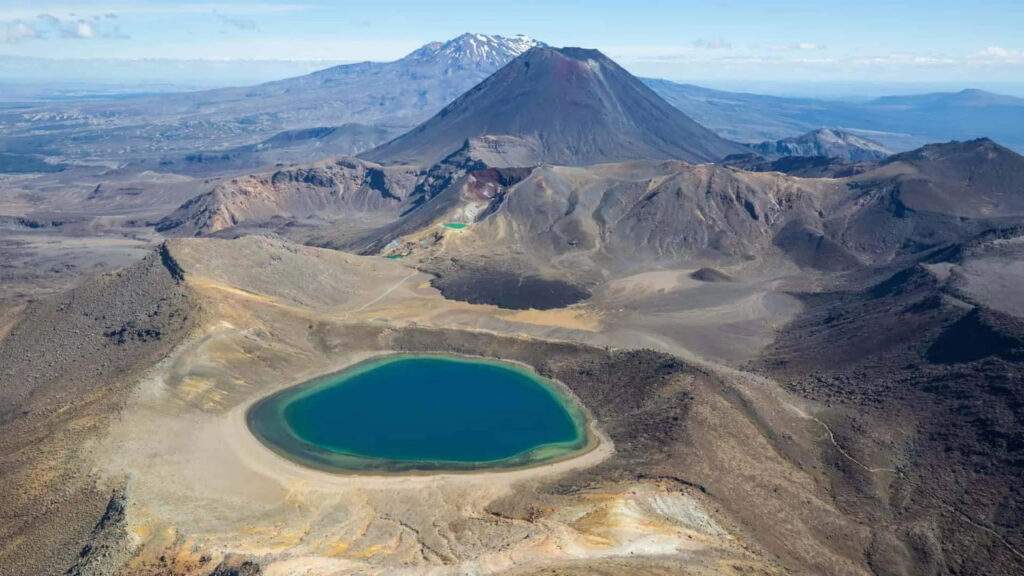
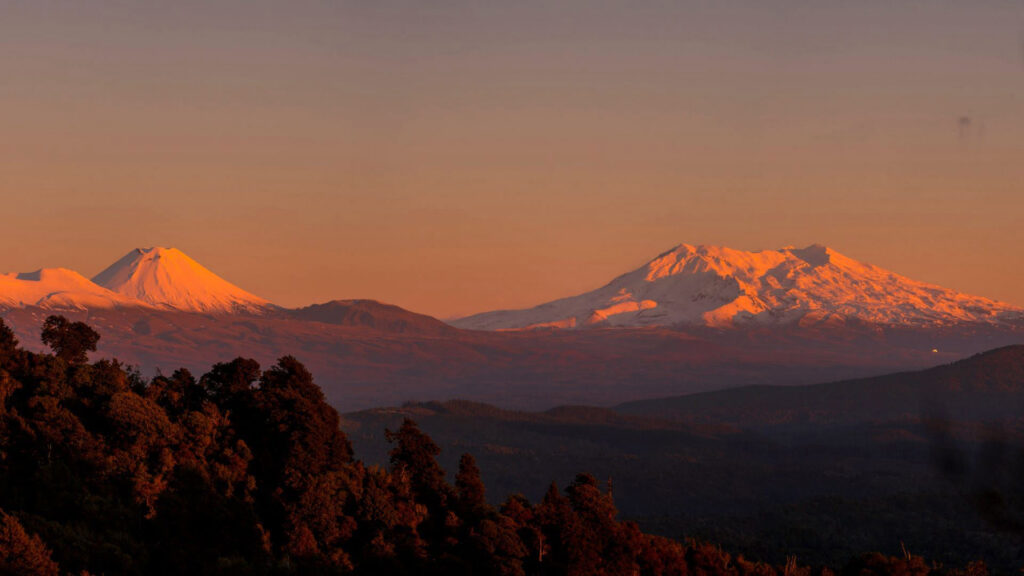
The park sits within a region shaped by volcanic activity over thousands of years. Tongariro, Ngāuruhoe, and Ruapehu dominate the skyline, while lava flows, craters, volcanic ridges, steaming areas, and alpine terrain surround them.
Walking through this environment can feel completely different from hiking through a conventional mountain landscape.
Instead of rolling green hills alone, you encounter dark volcanic rock, exposed slopes, crater formations, and unusual colors created by the interaction between geology, water, and minerals.
The landscape also changes dramatically as you gain elevation.
Lower sections can contain vegetation and forest, while higher sections become increasingly exposed. Eventually, trees disappear and the environment becomes dominated by rock, volcanic formations, and wide alpine views.
This contrast is part of what makes Tongariro National Park so memorable.
A single journey can take you through several distinct environments, allowing you to see how altitude, geology, and climate influence the landscape.
The volcanic character of the area also gives the park an atmosphere unlike many other hiking destinations.
Rather than simply walking among mountains, you are exploring a landscape that has been repeatedly reshaped by powerful geological processes.
For anyone interested in natural landscapes, that makes the park especially fascinating.
2. The Tongariro Alpine Crossing Is a Spectacular Adventure
The Tongariro Alpine Crossing is the attraction most closely associated with the park.
The route is approximately 19.4 kilometres one way and has a total elevation change of around 1,196 metres. It begins at about 1,120 metres above sea level and reaches its highest point at Red Crater, approximately 1,886 metres above sea level.
This is not a casual walk.
The Department of Conservation classifies the crossing as a challenging trip requiring a high level of fitness. The terrain is steep, undulating, exposed, and uneven, and weather conditions can change quickly.
What makes the route so appealing is the extraordinary variety of scenery.
The journey begins in the Mangatepōpō Valley before climbing toward the volcanic heart of the park. The landscape becomes increasingly exposed as the trail approaches South Crater and Red Crater.
From there, the route descends toward the famous Emerald Lakes before continuing through the volcanic landscape toward Blue Lake and the Ketetahi side of the crossing.
The experience is therefore more than simply walking a certain distance.
You move through several different landscapes during one journey, with each section providing a new perspective.
For experienced hikers who are properly prepared, the crossing can become one of the defining experiences of a New Zealand trip.
However, visitors should always check current weather, volcanic information, and track conditions before attempting it.
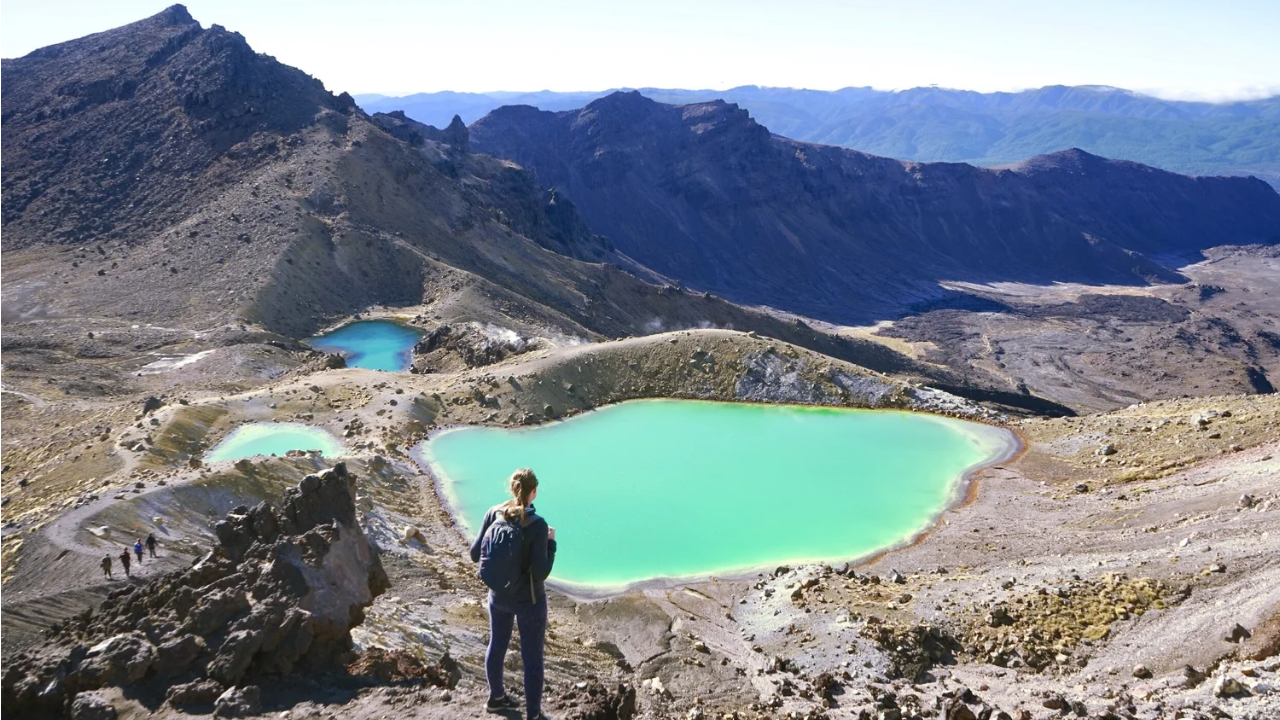
3. The Emerald Lakes Create One of New Zealand’s Most Famous Views
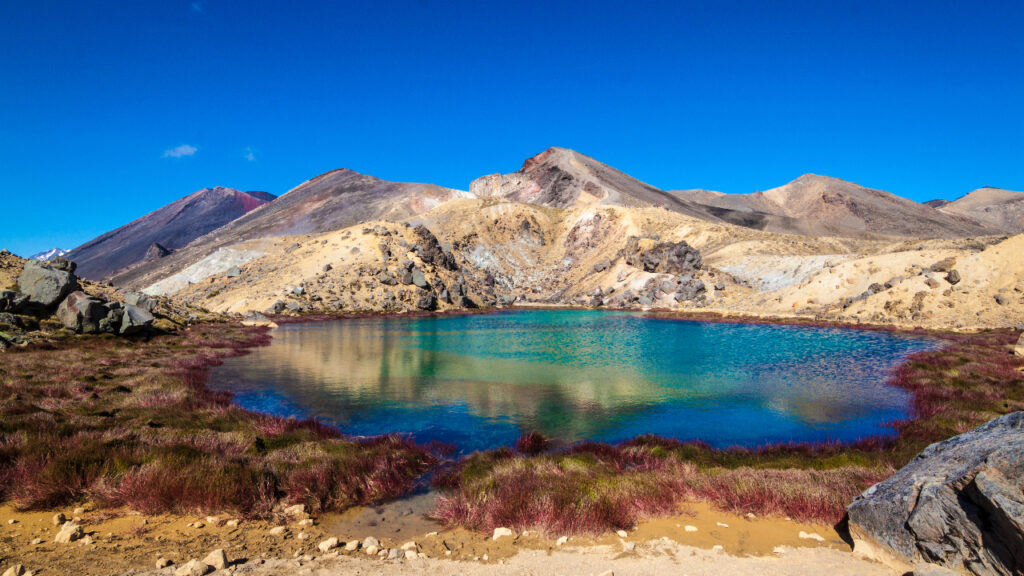
The Emerald Lakes are among the most recognizable sights in Tongariro National Park.
Their vivid colors stand out against the dark volcanic terrain, creating one of the most dramatic contrasts along the Tongariro Alpine Crossing.
The lakes are surrounded by exposed volcanic slopes, giving them an almost otherworldly appearance.
Their unusual colors are associated with minerals and volcanic activity in the surrounding environment. This combination of bright water and dark volcanic rock is one reason photographs of the area are so popular.
However, the Emerald Lakes are more than a scenic viewpoint.
They are part of a culturally significant landscape, and visitors are asked to treat the waterways with respect. DOC specifically asks people not to touch or enter the lakes and other waterways.
Respecting these requests is an important part of visiting responsibly.
You can appreciate the lakes from the track, photograph the surrounding scenery, and take time to understand the importance of the landscape without entering the water.
The view is also a reminder of how dramatically volcanic environments can differ from traditional alpine scenery.
Instead of snow-covered peaks and green meadows alone, you get a landscape of craters, mineral-rich water, volcanic rock, and open skies.
It is a scene that is difficult to mistake for anywhere else.
4. Red Crater Offers an Extraordinary Alpine View
Red Crater is another major highlight of the Tongariro Alpine Crossing.
At approximately 1,886 metres, it represents the highest point of the route and provides an expansive view across the surrounding volcanic landscape.
The crater itself is visually striking because of its reddish volcanic rock.
From the surrounding high ground, the crater provides a dramatic foreground while the wider landscape stretches toward distant mountains and lakes.
On a clear day, the views can be particularly impressive.
However, reaching Red Crater requires more than simply following a flat path.
The route includes steep and exposed sections, and loose volcanic material can make some parts of the descent difficult.
DOC warns that loose rocks and stones create slip hazards on steep sections of the crossing.
This is another reason why suitable footwear, preparation, and careful movement are important.
The reward is a viewpoint that demonstrates the scale and variety of Tongariro National Park.
From the higher elevations, the landscape opens dramatically, making it easier to appreciate how volcanic formations, valleys, lakes, and mountains fit together.
5. Tongariro National Park Has Deep Cultural Significance
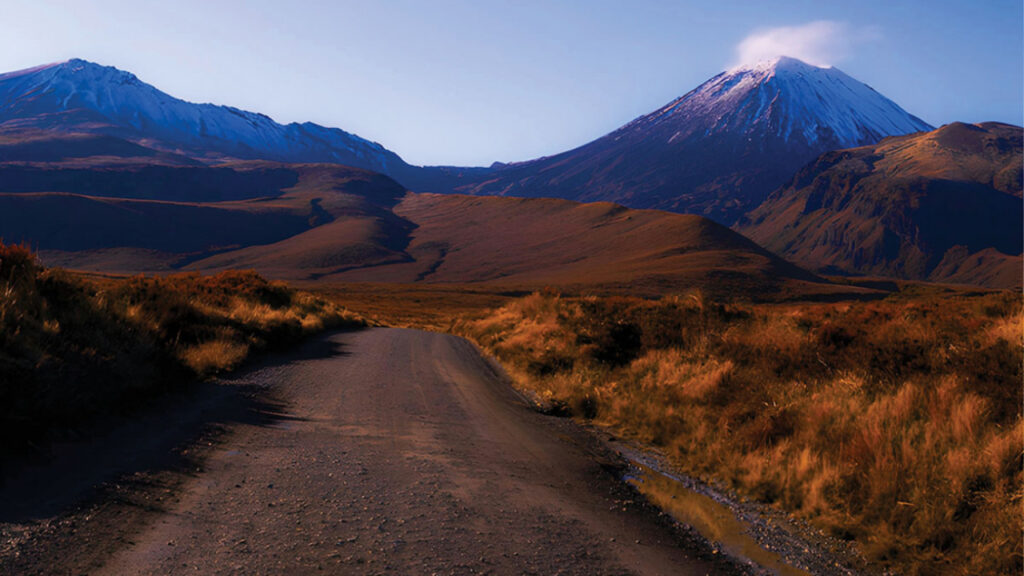
One of the most important things to understand about Tongariro National Park is that it is not simply a scenic destination.
The mountains and surrounding landscape have deep cultural and spiritual significance for Māori communities, including Ngāti Hikairo ki Tongariro of Ngāti Tūwharetoa.
The Department of Conservation describes the Tongariro Alpine Crossing as winding through mountains sacred to Ngāti Hikairo ki Tongariro. Visitors are asked to respect the requests of the kaitiaki, or guardians, of the area.
This cultural connection is an essential part of understanding the park.
The mountains should not be treated merely as objects to climb or photographic backgrounds.
They are part of a living cultural landscape with histories, traditions, and relationships extending across generations.
The park’s recognition as a UNESCO World Heritage site reflects both its outstanding natural features and its cultural values.
Visitors can contribute to protecting those values by staying on designated tracks, respecting restrictions, avoiding sacred areas where requested, and following guidance from local guardians and DOC.
This approach makes a visit more meaningful.
Instead of seeing Tongariro only as an adventure destination, you begin to understand why the landscape holds such importance to the people connected with it.
6. There Are Beautiful Walks Beyond the Alpine Crossing
Although the Tongariro Alpine Crossing is famous around the world, it is not the only way to explore the park.
This is important for visitors who do not want to complete a long alpine hike or who encounter weather conditions unsuitable for the crossing.
The park has several shorter and alternative routes that provide access to different landscapes.
The Soda Springs Walk follows the Mangatepōpō Stream toward cold-water springs surrounded by vegetation. During summer, the springs can create a small oasis of flowers within the volcanic environment.
The Taranaki Falls Walking Track is another popular option and provides a chance to see a waterfall while exploring a different section of the park.
The Tama Lakes Track is another alternative that provides dramatic views of volcanic terrain.
DOC specifically recommends alternatives such as Taranaki Falls and Tama Lakes when conditions are poor for the Tongariro Alpine Crossing.
These routes show that the park can be enjoyed without completing its most demanding hike.
For many visitors, choosing a shorter walk can actually provide a more relaxed experience.
You can spend more time observing the landscape, taking photographs, and appreciating the environment rather than focusing entirely on completing a long route.
7. Taranaki Falls Shows a Different Side of the Park
Taranaki Falls is a great example of the diversity found within Tongariro National Park.
The waterfall creates a different experience from the exposed volcanic landscapes associated with the Alpine Crossing.
Here, flowing water, vegetation, rock formations, and volcanic history come together.
The waterfall drops over an ancient lava flow, connecting the area’s present-day scenery with the geological forces that shaped it.
This makes the walk particularly interesting for visitors who want to see more than craters and alpine lakes.
The contrast between forested areas and volcanic terrain also makes the route visually varied.
One section can feel enclosed and peaceful, while another opens toward wider mountain views.
That variety is a recurring theme throughout the park.
Tongariro National Park is not defined by one landscape.
Its appeal comes from the way several environments exist within the same protected area.
If you have enough time, exploring more than one route can give you a much better understanding of the park’s diversity.
8. Tongariro National Park Is a Fantastic Photography Destination
Photographers have plenty of reasons to enjoy Tongariro National Park.
The volcanic mountains create dramatic subjects, while the Emerald Lakes provide striking color contrasts.
Red Crater offers unusual textures and shapes, and the surrounding valleys provide opportunities for wider landscape photographs.
The scenery can also change dramatically with the weather.
Cloud may move across a mountain, sunlight may illuminate a particular section of the landscape, or mist may reduce visibility and create an entirely different atmosphere.
This unpredictability is part of the appeal.
A viewpoint that looks one way in bright sunshine can feel completely different beneath clouds.
The changing light also means that the landscape does not necessarily look the same throughout a single day.
However, photography should always come second to safety and environmental responsibility.
Stay on designated tracks and avoid stepping into fragile vegetation simply to get a better angle.
Do not enter waterways or restricted areas.
The landscape is valuable precisely because it needs to be protected.
Responsible photography allows you to capture memories without damaging the environment you came to see.
9. The Park Supports Native Wildlife
Tongariro National Park is also home to a variety of native birds and other wildlife.
The forests and alpine environments provide different habitats, allowing visitors to encounter species associated with New Zealand’s native ecosystems.
Birds such as tūī, bellbirds, fantails, tomtits, and other native species can be found in parts of the park.
Wildlife encounters are never guaranteed, but that unpredictability can make them especially exciting.
You might hear a bird calling from the forest before you see it.
You may notice movement among the vegetation or spot a bird while taking a break on the trail.
The best approach is to observe quietly and give animals plenty of space.
Visitors should never feed wildlife or deliberately disturb animals for photographs.
Protecting native species is part of protecting the park itself.
Staying on designated tracks and following conservation guidance helps reduce unnecessary disturbance.
The quieter you are, the more likely you may be to notice the natural sounds of the environment around you.
For many visitors, those small encounters become some of the most memorable parts of a trip.
10. Tongariro National Park Changes With the Seasons
The appearance and conditions of Tongariro National Park vary considerably throughout the year.
During warmer months, hiking conditions are generally more accessible, alpine vegetation becomes more visible, and longer daylight hours allow visitors more time to explore.
Winter creates an entirely different environment.
Snow and ice can cover the volcanic landscape, transforming familiar trails into challenging alpine terrain.
DOC states that from May to late October, special skills and preparation are required for the Tongariro Alpine Crossing because of hazards including snow, ice, avalanche terrain, and sub-zero temperatures.
Winter visitors therefore need to understand that the same trail can present very different conditions depending on the season.
For people without appropriate alpine experience, choosing a suitable alternative route is a safer option.
Weather can also change quickly outside winter.
DOC notes that strong winds, heavy rainfall, very cold temperatures, poor visibility, and even snow can occur during summer.
Checking the forecast before setting out is therefore essential.
The season can influence what you see, but current conditions should always influence what you decide to do.
What Makes the Tongariro Alpine Crossing Challenging?
The Tongariro Alpine Crossing is sometimes presented as a must-do attraction without enough emphasis on its difficulty.
It is a serious alpine hike.
The route is long, includes significant elevation change, and passes through exposed terrain.
DOC classifies it as a challenging track requiring high fitness.
The weather is another major factor.
A sunny morning does not guarantee stable conditions throughout the day.
Wind, rain, cold, cloud, and poor visibility can develop quickly.
The volcanic environment also means visitors need to understand volcanic risk.
DOC explains that the crossing passes through volcanic hazard zones and that volcanic risk remains present even when the track is open. Visitors are advised to check volcanic activity information before starting.
The combination of distance, elevation, exposure, weather, and volcanic hazards means preparation matters.
This does not make the crossing something to avoid.
It simply means that it should be approached as a genuine mountain journey rather than a casual tourist attraction.
When conditions are suitable and visitors are properly prepared, the route can be an extraordinary experience.
How to Prepare for a Visit to Tongariro National Park
Preparation is important whether you are planning a short walk or a full day on the Alpine Crossing.
For the crossing, DOC recommends carrying 2 to 3 litres of water because water along the route is not suitable for drinking.
Appropriate clothing is equally important.
A waterproof layer can protect you from rain and wind, while warm layers are useful when temperatures fall at higher elevations.
Sturdy footwear is particularly helpful on uneven volcanic surfaces.
Sun protection is also worth carrying because alpine environments can expose you to strong sunlight even when temperatures are cool.
A fully charged phone can be useful, but you should not depend entirely on mobile coverage.
Before setting out, check the current weather forecast, track conditions, volcanic information, and transport arrangements.
DOC recommends booking for visitors using any part of the Tongariro Alpine Crossing, and a booking is required when using shuttle or guided walk services.
Planning ahead also helps reduce congestion and supports more sustainable visitor management.
The park receives large numbers of visitors, and DOC and Ngāti Hikairo ki Tongariro are working to protect the area’s cultural, environmental, and infrastructure values.
Recent Fire Recovery in Tongariro National Park
Visitors should also be aware that parts of Tongariro National Park have recently been affected by significant fires.
In November 2025, fires affected an estimated 2,935 hectares of the park. The Tongariro Alpine Crossing reopened on 17 November 2025 after safety assessments, but visitors can still see blackened vegetation and affected landscapes.
The current DOC information asks visitors to respect a 10-year restorative rāhui placed over affected areas by hapū Ngāti Hikairo ki Tongariro.
Visitors are asked to remain on designated tracks, avoid entering fire-affected areas off-track, clean shoes and equipment before visiting to reduce the spread of weeds, and take rubbish home.
This recovery process is an important part of the park’s current story.
The burned landscape may initially look damaged, but natural regeneration is already occurring.
In March 2026, DOC reported that ecologists had found an abundance of a threatened plant species in fire-affected ground, providing encouraging evidence of ecological recovery.
Visiting responsibly can therefore contribute to the long-term protection of the area.
The landscape visitors see today is part of an ongoing recovery process, and respecting restrictions helps give vegetation and wildlife the opportunity to recover.
Why Tongariro National Park Is Worth Visiting
Tongariro National Park brings together an extraordinary range of experiences.
You can see volcanic craters, colorful lakes, alpine valleys, waterfalls, native forests, and distant mountain views within the same region.
The park also combines natural beauty with deep cultural significance.
That combination makes it much more than a hiking destination.
The Tongariro Alpine Crossing remains one of the most impressive ways to experience the landscape, but visitors should not feel that completing the famous route is the only way to appreciate the park.
Shorter walks can provide beautiful scenery without requiring the same level of fitness or preparation.
The important thing is choosing an experience that matches your abilities and current conditions.
The park also rewards visitors who take their time.
Instead of rushing from one viewpoint to another, you can stop to observe the volcanic formations, listen to the surrounding environment, and appreciate how dramatically the landscape changes.
That slower approach can make the experience more meaningful.
Tongariro National Park demonstrates how geology, culture, wildlife, weather, and human stewardship can all be connected within one landscape.
Final Thoughts on Tongariro National Park
Tongariro National Park is one of New Zealand’s most extraordinary destinations and a place where almost every section of the landscape tells a story.
The volcanic mountains reveal the power of geological processes.
The crater lakes demonstrate the unusual colors and formations that can develop in volcanic environments.
The forests and waterways provide habitat for native wildlife, while the mountains themselves hold profound cultural significance for Māori communities.
The Tongariro Alpine Crossing may be the park’s most famous experience, but the wider region offers plenty of alternatives for visitors who want shorter walks or different scenery.
From Soda Springs and Taranaki Falls to Tama Lakes and other trails, there are many ways to experience the park.
At the same time, visitors should understand that Tongariro is a demanding and changeable environment.
Weather can deteriorate quickly, volcanic hazards remain present, and winter conditions require specialist skills and equipment.
The recent fires also mean that responsible behavior is especially important as parts of the park recover.
Stay on designated tracks, respect cultural guidance, follow current DOC information, and avoid areas where access is restricted.
If you approach the park with preparation and respect, Tongariro National Park can provide an unforgettable New Zealand experience.
Its combination of volcanic scenery, alpine landscapes, colorful lakes, waterfalls, wildlife, and cultural heritage makes it unlike almost any other hiking destination.
Whether you spend a full day crossing its volcanic terrain or choose a shorter walk through its valleys and forests, the park offers a remarkable opportunity to experience one of New Zealand’s most distinctive landscapes.