Appenzell Alps is one of Switzerland’s most beautiful mountain regions for travelers looking for dramatic scenery, peaceful hiking trails, traditional Alpine culture, and unforgettable views. Located in northeastern Switzerland, the region combines rugged limestone peaks with green meadows, clear mountain lakes, historic villages, waterfalls, mountain inns, and panoramic viewpoints.
Unlike some of Switzerland’s more famous destinations, the Appenzell Alps can feel refreshingly peaceful and authentic. The landscape is spectacular, but the experience is also closely connected to the traditions and everyday life of the surrounding Appenzellerland.
At the heart of the region is the Alpstein massif, home to Säntis, the highest mountain in the Alpstein, along with famous destinations such as Seealpsee, Ebenalp, Wildkirchli, Äscher, Hoher Kasten, and Schäfler. Switzerland Tourism highlights the combination of the Säntis, Seealpsee, Äscher mountain inn, and traditional Appenzell culture as major attractions of the area.
The hiking possibilities are particularly impressive. Appenzellerland Tourism describes the Alpstein as having countless hiking routes ranging from easy walks to demanding mountain hikes, with mountain inns conveniently positioned along many routes.
For visitors, this means you can design your trip around the kind of experience you want.
You could spend a relaxed morning walking beside a mountain lake, take a cable car to a panoramic summit, hike between traditional mountain huts, explore a historic cave, or challenge yourself with a longer Alpine route.
The Appenzell Alps are therefore not simply a destination for experienced hikers.
They can be enjoyed by photographers, families, nature lovers, culture enthusiasts, and travelers who simply want to slow down and experience a spectacular part of Switzerland.
Why Visit the Appenzell Alps?
There are many reasons to visit the Appenzell Alps, but perhaps the greatest is the variety packed into a relatively compact mountain region.
The scenery can change dramatically within a short distance.
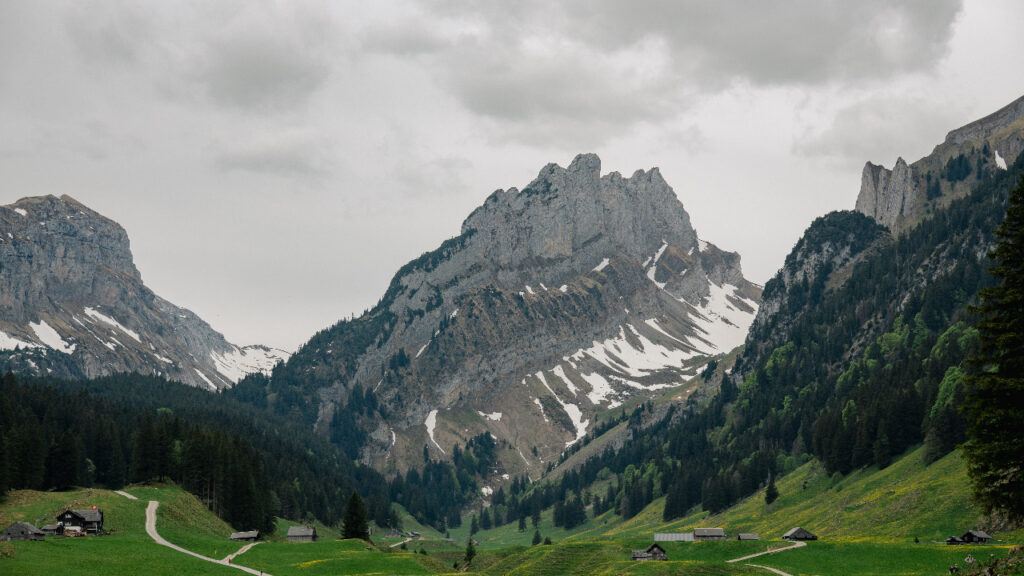
One moment you may be walking through green meadows dotted with traditional Alpine buildings. A little farther along, steep limestone cliffs rise above the trail. Continue toward a mountain lake and the landscape becomes calm and reflective, with peaks mirrored in clear water.
The region also has an unusually strong connection between nature and local culture.
Appenzell itself is known for traditional customs, decorated houses, yodelling, cheese production, seasonal cattle processions, and other aspects of Swiss heritage. Switzerland Tourism describes Appenzell as a traditional center located between the Alpstein massif and Lake Constance.
This makes the area particularly appealing if you want more from a Switzerland trip than famous mountain viewpoints.
You can experience the mountains while also discovering the villages, food, architecture, and traditions that have developed around them.
The hiking network adds another advantage.
Appenzellerland Tourism states that the wider Appenzellerland has around 1,200 kilometers of hiking trails, including themed routes suitable for families.
That gives travelers enormous flexibility.
You do not have to follow one famous trail.
Instead, you can create an itinerary that matches your available time and hiking experience.
Discover Säntis
Säntis is the highest mountain in the Alpstein and one of the defining landmarks of northeastern Switzerland.
At 2,502 meters, it dominates the surrounding landscape and provides extraordinary views from its summit.
Switzerland Tourism describes Säntis as the highest mountain in the Alpstein and notes that visitors can reach the summit by aerial cableway from Schwägalp in about ten minutes. From the top, views can extend toward Lake Constance and six countries in favorable conditions.
This makes Säntis an excellent choice for travelers who want spectacular Alpine views without completing a long summit ascent on foot.
The cable-car journey itself is part of the experience.
As the railway rises from Schwägalp, the landscape gradually opens up below.
At the summit, the panorama becomes much broader.
You can look across valleys and mountain ranges while experiencing the distinctive rocky environment of the Alpstein.
Säntis also provides access to panoramic trails and mountain experiences.
However, conditions at the summit can be considerably different from those in the valley.
Cloud, wind, rain, snow, and low temperatures can appear even when the weather below looks pleasant.
Always check the current mountain conditions before traveling to higher elevations.
Visit Beautiful Seealpsee
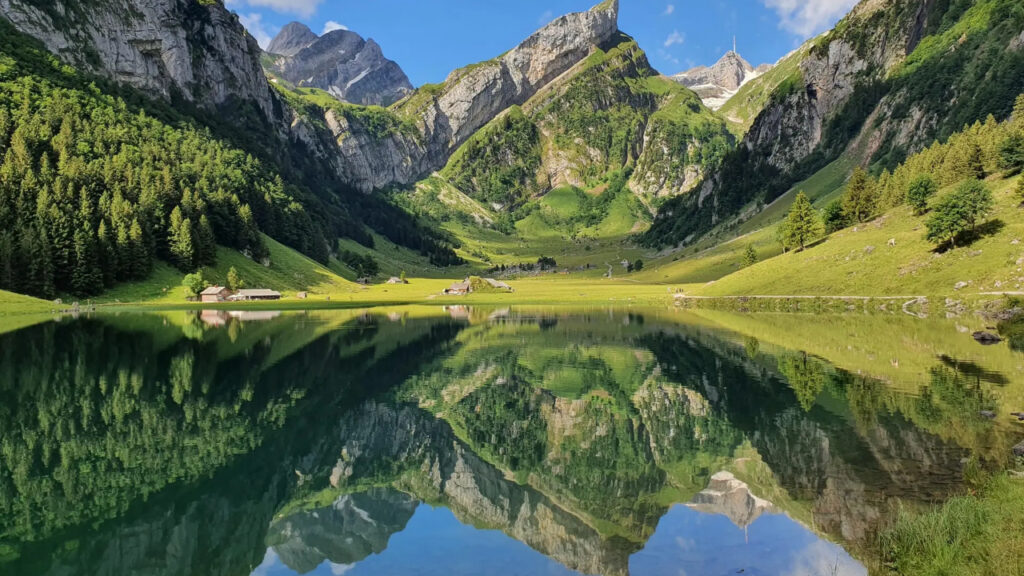
Seealpsee is arguably the most famous mountain lake in the Appenzell Alps.
Nestled between dramatic Alpine slopes, the lake provides one of the region’s most recognizable landscapes.
The easiest official route to Seealpsee begins at Wasserauen and follows a stream through a forest and Alpine meadow before reaching the lake. Appenzellerland Tourism currently describes this as an easy T2 mountain hike of approximately 7.34 kilometers, with 377 meters of ascent and descent and an estimated walking time of about two and a half hours.
This makes Seealpsee an excellent introduction to the region.
The route is long enough to feel like a genuine mountain outing without requiring the commitment of one of the more demanding Alpstein crossings.
When you reach the lake, the scenery changes completely.
Traditional mountain huts sit around the water, while the surrounding cliffs and peaks create a dramatic backdrop.
You can walk around the lake, stop for a meal at one of the mountain inns, or simply sit beside the water and enjoy the scenery.
The area can become busy during popular periods, so visiting earlier in the day can make the experience more peaceful.
Explore Ebenalp
Ebenalp is another major attraction in the Appenzell Alps and one of the easiest places to combine mountain scenery with cultural and historical attractions.
The Wasserauen–Ebenalp cable car provides convenient access to the mountain.
From Ebenalp, visitors can explore hiking routes toward Wildkirchli and the famous Äscher mountain inn.
Switzerland Tourism specifically recommends combining a visit to Seealpsee with the ascent toward Äscher, the Wildkirchli caves, and the Ebenalp cable car.
Ebenalp is therefore more than a viewpoint.
It can serve as the starting point for several different experiences.
You can enjoy panoramic views, explore mountain trails, visit the caves, or descend toward other parts of the Alpstein.
Because the cable car reduces the amount of uphill walking required, Ebenalp is also a useful choice for visitors who want to experience high mountain scenery without committing to a strenuous climb from the valley.
As always, check the current cable-car schedule and weather conditions before setting out.
See the Famous Äscher Mountain Inn
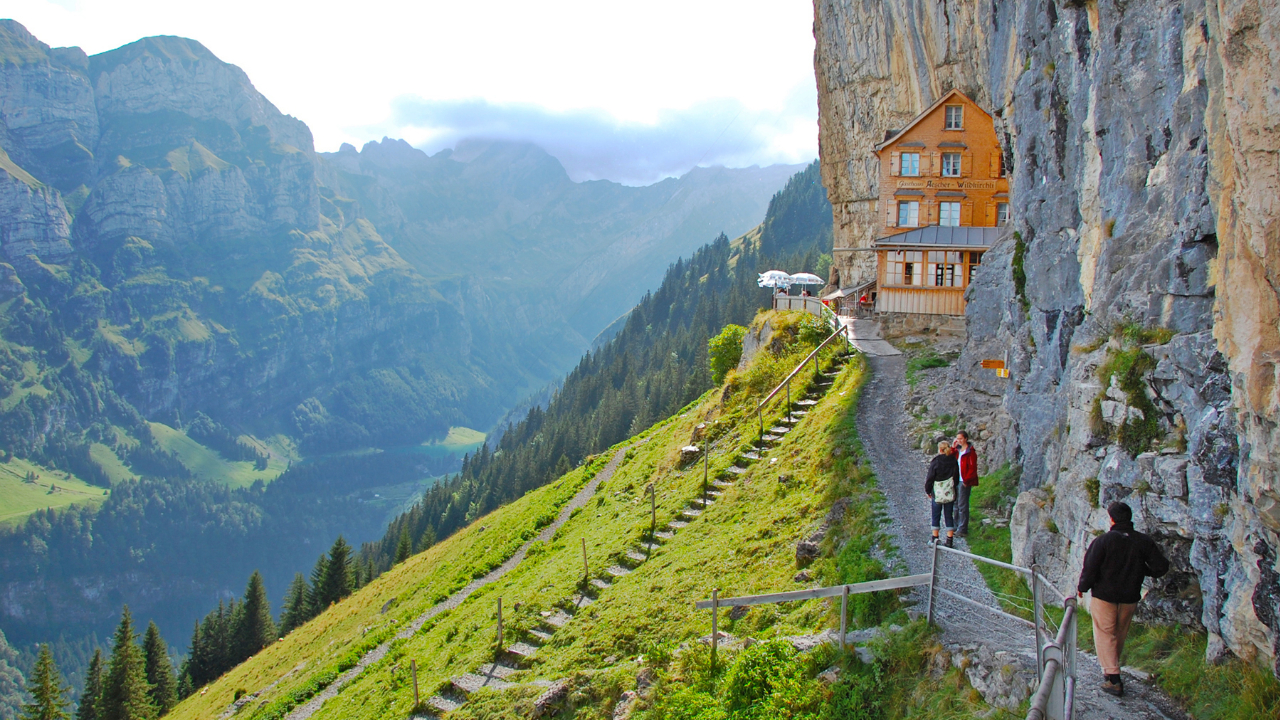
Äscher is one of the most photographed places in the Appenzell Alps.
The mountain inn is built directly against a dramatic rock face, creating an extraordinary setting that has become internationally recognizable.
Its position beneath towering cliffs makes it look almost as though it is part of the mountain itself.
The location is especially impressive when approached on foot.
The surrounding landscape combines steep rock walls, green Alpine slopes, traditional buildings, and distant mountain views.
Although Äscher is a major attraction, it is best experienced as part of a wider itinerary rather than simply treated as a photograph stop.
A route through the Wildkirchli area can combine several highlights in one outing.
Depending on your route and conditions, you may be able to visit the caves, enjoy the mountain scenery, stop at the inn, and continue toward Ebenalp.
Because the area can become busy, visitors should remain considerate of other hikers and follow local instructions.
The popularity of the location does not change the fact that it is part of a sensitive mountain environment.
Explore the Wildkirchli Caves
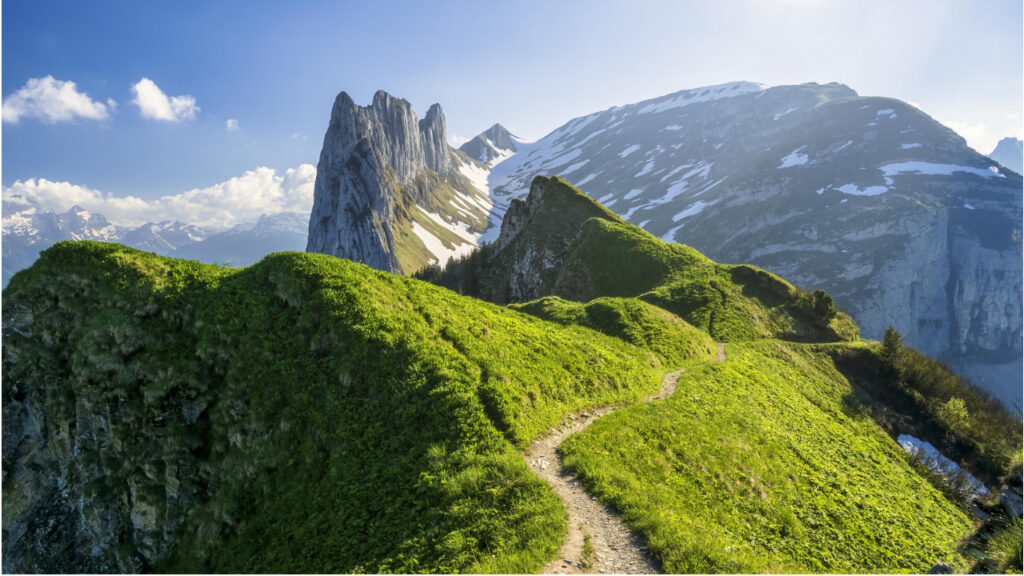
The Wildkirchli caves add a fascinating historical dimension to the Appenzell Alps.
Located near Ebenalp and Äscher, the caves are surrounded by dramatic rock formations and Alpine scenery.
The experience is very different from simply hiking across an open mountain ridge.
Instead, the trail leads visitors into a landscape shaped by rock, erosion, and human history.
Switzerland Tourism lists the Wildkirchli and the Wasserauen–Ebenalp cable car among the major highlights of the Appenzell region.
The caves are therefore an excellent addition to an Ebenalp itinerary.
They also demonstrate how varied the Alpstein landscape can be.
Within a single outing, you can move from an open mountain plateau to steep cliffs, cave passages, traditional architecture, and panoramic viewpoints.
When visiting, follow all signs and access restrictions.
Cave and mountain environments can change with weather and seasonal conditions, so current information should always take priority.
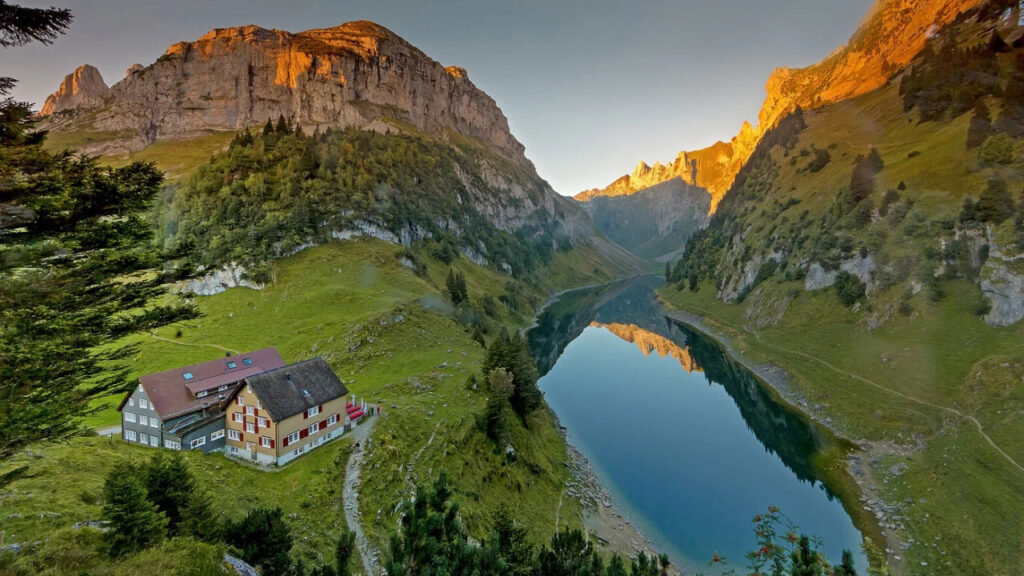
Hike Around Fählensee
Fählensee is another of the remarkable mountain lakes found within the Alpstein.
Unlike the bright open appearance of Seealpsee, Fählensee has a more enclosed and dramatic setting.
The lake lies among steep mountain walls, creating a powerful sense of being surrounded by the Alps.
It is part of the popular three-lake hiking experience that also includes Seealpsee and Sämtisersee.
Appenzellerland Tourism describes a route beginning at Wasserauen and continuing through Seealpsee and Meglisalp before reaching Fählensee and then Sämtisersee, eventually ending at Brülisau.
This route provides a much deeper experience of the Alpstein than simply visiting one lake.
The scenery changes throughout the journey.
Seealpsee introduces the landscape.
Meglisalp provides a traditional Alpine settlement.
The route then climbs toward the surrounding mountain terrain before descending toward Fählensee.
The lake’s dark appearance and steep surroundings create an atmosphere that feels dramatically different from Seealpsee.
This is an excellent choice for experienced hikers who want a longer day in the mountains.
Discover Sämtisersee
Sämtisersee is the third major mountain lake associated with the classic three-lake route.
The lake is surrounded by the characteristic limestone landscape of the Alpstein.
Its position within the valley creates a peaceful contrast to the more exposed sections of the hiking route.
The three-lake journey is one of the best ways to understand the variety of the region.
Rather than seeing three isolated attractions, you experience how the landscape changes between them.
According to the official tourism hiking recommendation, the route can be completed in one day by experienced hikers or divided into a two-day trip with an overnight stay at a mountain inn such as Meglisalp or Bollenwees.
For travelers who prefer a slower pace, splitting the journey can make the experience more enjoyable.
An overnight mountain stay also gives you the opportunity to experience the Alpstein after the day visitors have left.
The mountains can feel remarkably peaceful in the early morning and evening.
Hike from Wasserauen
Wasserauen is one of the most important starting points for exploring the Appenzell Alps.
It provides access to Seealpsee, Ebenalp, and several longer mountain routes.
The location is particularly convenient because the railway connects with the hiking area.
From Wasserauen, you can choose between easier outings and much more demanding routes.
For a relaxed day, the walk to Seealpsee is a popular option.
For a more ambitious adventure, you can continue into the heart of the Alpstein.
Appenzellerland Tourism lists numerous routes beginning around Wasserauen, including hikes toward Seealpsee, Säntis, and other mountain destinations.
The flexibility makes Wasserauen an excellent base for hiking.
You do not need to commit to one particular route before arriving.
Instead, you can consider the weather, your energy, and trail conditions before deciding how far you want to go.
This flexibility is particularly useful in mountain environments where conditions can change quickly.
Experience the Great Alpstein Tour
Travelers looking for a longer adventure can consider the Great Alpstein Tour.
This multi-stage experience provides an opportunity to explore a much larger section of the mountain landscape rather than visiting individual attractions as separate day trips.
Appenzellerland Tourism specifically lists the Great Alpstein Tour as a two-day hiking experience among its recommended routes.
A multi-day journey changes the way you experience the mountains.
Instead of constantly thinking about returning to the valley, you can move from one mountain area to another and stay overnight along the route.
This creates a deeper connection with the landscape.
Mountain inns become part of the journey, and changing weather and light can make the scenery look completely different from one morning to the next.
A multi-day hike should only be attempted with appropriate preparation.
Check the current condition of every section, confirm accommodation availability, carry suitable clothing and equipment, and make sure your planned route matches your experience.
Enjoy the Hoher Kasten Panorama
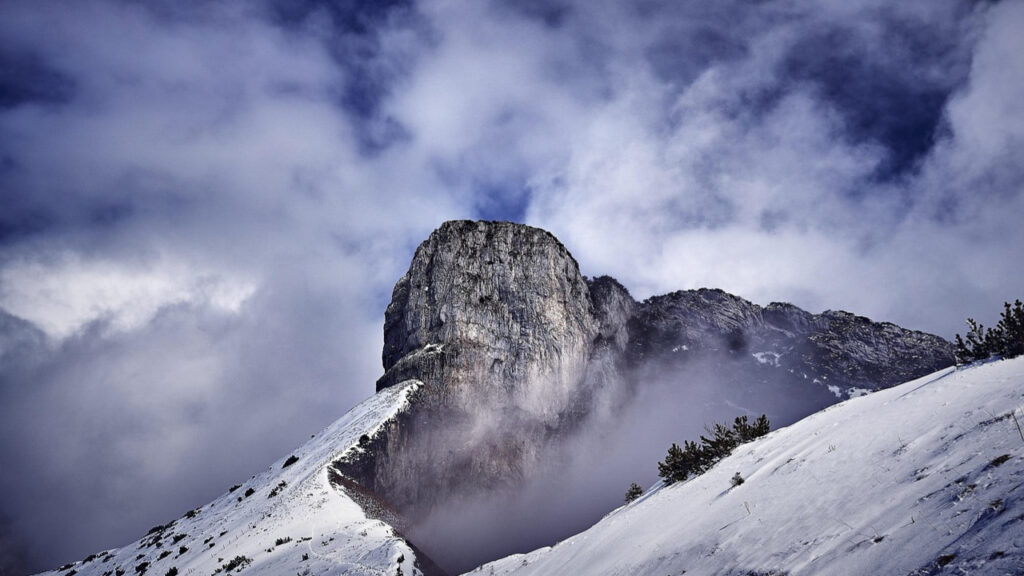
Hoher Kasten is another excellent viewpoint in the Appenzell Alps.
The summit provides expansive views across the surrounding mountains and valleys.
One of the attractions of Hoher Kasten is its accessibility by cable car.
This means visitors can enjoy a high mountain panorama without needing to complete a long climb from the valley.
Switzerland Tourism highlights Hoher Kasten as a destination offering far-reaching views toward six countries.
The panoramic setting makes it particularly attractive for visitors with limited time.
You can reach the summit, enjoy the views, explore the area, and return to the valley without committing to a full-day hike.
Hoher Kasten also demonstrates one of the defining characteristics of the Appenzell Alps.
The region offers both serious hiking adventures and accessible sightseeing experiences.
You can choose how physically demanding you want your day to be.
Explore the Alpine Garden at Hoher Kasten
Hoher Kasten also provides access to an Alpine garden where visitors can learn more about the region’s mountain flora.
Appenzellerland Tourism lists the Alpine garden among the notable attractions of the Alpstein.
For nature lovers, this can be an excellent complement to the larger panoramic landscape.
Mountain flowers and plants are adapted to challenging conditions such as cold temperatures, strong sunlight, wind, and rocky soil.
Seeing them in their natural environment can make a mountain visit more educational.
The garden is also a good reminder that the Appenzell Alps are not simply about dramatic peaks.
The smaller details matter too.
Wildflowers, grasses, rock formations, streams, forests, and wildlife all contribute to the character of the landscape.
Walk Through Traditional Alpine Meadows
One of the most distinctive aspects of the Appenzell Alps is the contrast between rugged mountains and green Alpine meadows.
The landscape around Appenzellerland contains traditional agricultural areas where cattle grazing remains an important part of local culture.
As you hike, you may pass small farm buildings, wooden huts, fences, and grazing animals.
This gives the region a very different atmosphere from some high-altitude destinations dominated by bare rock and snow.
Switzerland Tourism emphasizes the connection between Appenzell’s landscapes and traditions, including cattle processions, cheese production, and local customs.
The result is a mountain environment where nature and culture are closely connected.
Walking through these areas requires respect for local agriculture.
Stay on designated paths, keep your distance from animals, and follow signs around private land and working farms.
Discover Appenzell Village
Although the mountains are the main attraction, spending time in Appenzell itself can make your trip much more complete.
The village is known for its colorful and elaborately decorated buildings.
Traditional customs remain an important part of local identity.
Switzerland Tourism describes Appenzell as a center of Swiss traditions including yodelling, cheese, seasonal cattle processions, and traditional dances.
Walking through the village provides a pleasant contrast to a day in the mountains.
Instead of dramatic cliffs and exposed ridges, you encounter narrow streets, decorated façades, local shops, cafés, and cultural attractions.
It is an excellent place to spend an afternoon after a hike.
You can also use Appenzell as a base for exploring the wider region.
The railway and public transportation network makes it possible to reach several mountain destinations without relying entirely on a car.
Taste Appenzell Cheese
Food is an important part of the Appenzell experience.
The region is particularly associated with Appenzeller cheese, a traditional Swiss cheese with a distinctive flavor.
Visitors can learn more about local cheese production at the Appenzeller Schaukäserei, which Switzerland Tourism lists among the region’s major attractions.
Combining a mountain excursion with a local food experience can make a trip more memorable.
After spending hours hiking, stopping for a traditional meal or tasting local cheese provides a chance to connect the landscape with the region’s agricultural traditions.
Many mountain inns also provide traditional Swiss dishes.
Appenzellerland Tourism notes that numerous mountain inns are positioned along hiking routes, allowing visitors to stop for food and refreshments while exploring the mountains.
This is one of the pleasures of hiking in the region.
You do not necessarily need to carry a full day’s food supply if you plan your route around open mountain inns.
However, always carry water and some emergency snacks, particularly on longer or more remote routes.
Visit the Alpstein Mountain Inns
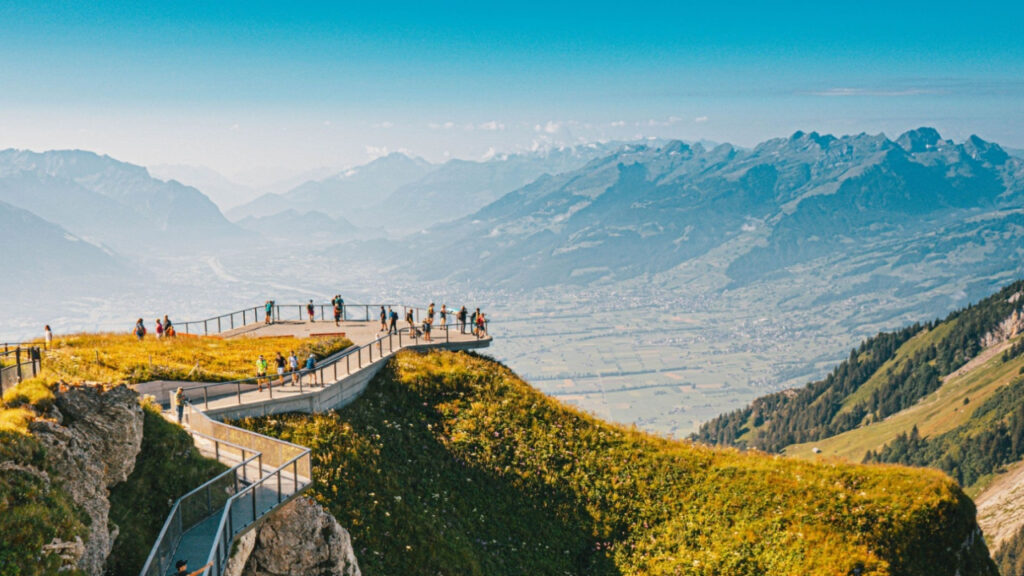
Mountain inns are an important part of the Appenzell Alps experience.
They provide places to eat, rest, and sometimes stay overnight.
The official tourism organization lists numerous mountain inns throughout the Alpstein, including establishments around Seealpsee, Meglisalp, Bollenwees, Ebenalp, Schäfler, Rotsteinpass, and other locations.
These inns also contribute to the cultural character of the region.
They are not simply modern tourist facilities.
Many are closely connected to traditional Alpine life and agriculture.
Stopping at one during a hike can therefore become part of the journey itself.
The view from a mountain terrace can be just as memorable as the meal.
If you plan to stay overnight, check opening periods and availability in advance.
Mountain accommodation can have limited capacity, particularly during popular periods.
Take the Route from Seealpsee Toward Säntis
For experienced hikers, the route from Seealpsee toward Säntis provides a much more demanding mountain experience.
The route climbs through increasingly rugged terrain toward the higher sections of the Alpstein.
Appenzellerland Tourism describes a route from Wasserauen through Seealpsee, Mesmer, Wagenlücke, and toward Säntis, with Gross Schnee, a small glacier beneath the summit, among the notable features along the way.
This is a completely different experience from the easier walk around Seealpsee.
The landscape becomes steeper and more exposed.
The elevation increases.
Weather conditions can become more serious.
For that reason, this route should be approached according to current conditions and your hiking experience.
Do not choose it simply because it appears on a list of famous things to do.
The mountains should be enjoyed at a level appropriate to your preparation.
For visitors who are not experienced with demanding mountain terrain, taking a cable car toward Säntis can provide a safer and more accessible alternative.
Enjoy the Appenzell Alps in Summer
Summer is one of the best seasons for hiking in the Appenzell Alps.
The meadows are green, mountain trails become more accessible, and many cable cars and mountain inns operate for the hiking season.
This is the ideal period for popular routes such as Seealpsee and the longer Alpstein crossings, although conditions at higher elevations can still vary.
Summer also provides long daylight hours.
This gives hikers more flexibility when planning their routes.
However, it is important not to underestimate mountain weather.
A sunny morning can turn into an afternoon of clouds or rain.
Thunderstorms can also affect exposed ridges and summits.
Before beginning a hike, check the local forecast and trail information.
If the weather deteriorates, be prepared to shorten your route or return to a lower elevation.
Experience the Appenzell Alps in Autumn
Autumn brings a quieter atmosphere and changing colors to the lower landscapes.
Forests can take on shades of gold and brown, while the mountains begin transitioning toward winter.
The season can be particularly attractive for photography.
However, visitors should remember that mountain transportation and mountain inns operate according to seasonal schedules.
Higher routes may also become more difficult as temperatures fall.
If you are planning an autumn trip, confirm opening dates before traveling.
A beautiful mountain day can quickly become frustrating if a cable car or restaurant you expected to use has already closed for the season.
Visit the Appenzell Alps in Winter
Winter transforms the landscape into a completely different environment.
Snow covers the meadows and mountain slopes, and the higher Alpstein becomes a cold-weather destination.
Some winter activities are available in the region, while the Laternliweg at Schwägalp is highlighted by Switzerland Tourism as a winter walking experience.
Winter hiking should not be treated as simply summer hiking with snow.
Snow and ice can significantly change trail difficulty.
Visitors should use routes appropriate for winter conditions and follow current local recommendations.
The higher mountains can also experience much more severe weather than the valleys.
If your main goal is the classic Seealpsee or Alpstein hiking experience, summer and early autumn are generally easier periods to plan around.
Best Time to Visit the Appenzell Alps
The best time to visit the Appenzell Alps depends on your itinerary.
For hiking, summer and early autumn are generally the most convenient seasons.
July, August, and September can offer excellent conditions for mountain trails, although weather always needs to be checked.
Late spring can be beautiful at lower elevations but may still have snow on higher trails.
Autumn can provide peaceful trails and changing colors but requires more careful attention to operating schedules.
Winter is best suited to visitors specifically looking for snowy landscapes and winter activities.
Regardless of season, check current trail conditions before setting out.
The Appenzell Alps contain terrain ranging from gentle paths to demanding mountain routes, and conditions can vary considerably between valleys and summits.
How Difficult Are the Appenzell Alps Hikes?
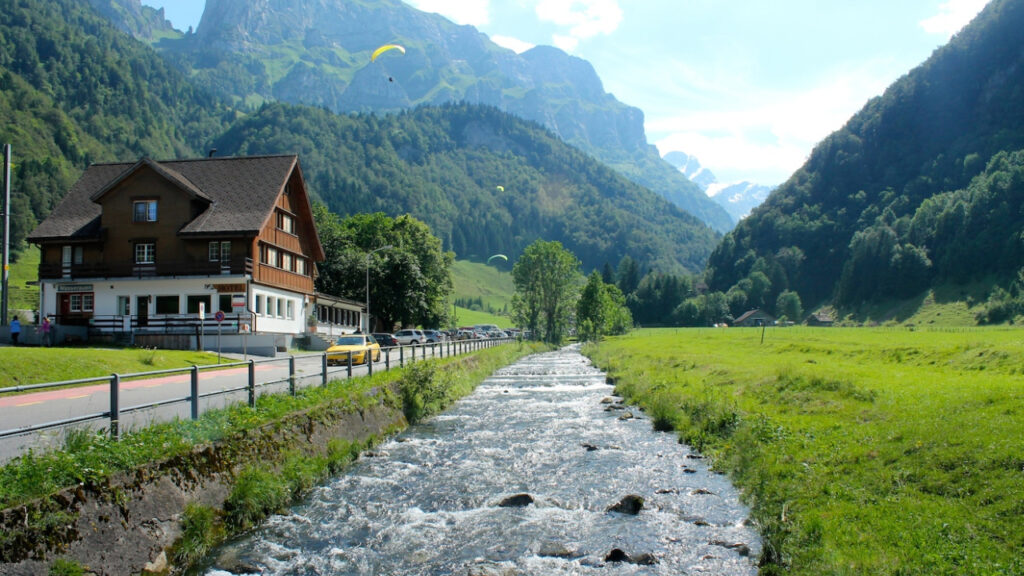
One of the great advantages of the Appenzell Alps is the variety of hiking difficulty.
Some routes are relatively easy.
The official Seealpsee route, for example, is classified as T2 and covers about 7.34 kilometers with 377 meters of ascent and descent.
Other routes are considerably more demanding.
Longer Alpstein crossings can involve steep ascents, rocky terrain, and significant elevation changes.
The important thing is to choose the route based on your experience rather than simply its popularity.
Before starting a hike, check:
- Distance
- Elevation gain
- Elevation loss
- Terrain
- Weather
- Trail condition
- Cable-car schedules
- Estimated hiking time
Remember that mountain hiking can be significantly more demanding than walking the same distance at low elevation.
Take breaks when needed and allow additional time rather than rushing to meet a transportation deadline.
What to Pack for the Appenzell Alps
Your packing list should depend on your route and the season.
For a typical summer hike, useful items include:
- Comfortable hiking shoes
- Water
- Snacks
- Lightweight backpack
- Waterproof jacket
- Warm layer
- Sunglasses
- Sun protection
- Phone
- Portable battery
- Basic first-aid supplies
Sturdy footwear becomes particularly important on longer or rockier routes.
Mountain weather can also change quickly, so carrying a waterproof outer layer and warm clothing is sensible even when the valley is warm.
For more demanding hikes, consider navigation equipment and additional emergency supplies appropriate to your route.
The goal is not to carry everything imaginable.
It is to have the essentials needed for the specific conditions you are likely to encounter.
Photography in the Appenzell Alps
The Appenzell Alps are an outstanding destination for landscape photography.
Seealpsee is one of the most obvious subjects.
Its clear water, mountain surroundings, and traditional huts provide numerous compositions.
But photographers should also explore beyond the famous locations.
The views from Säntis and Hoher Kasten provide broad panoramas.
The cliffs around Ebenalp and Äscher create dramatic vertical compositions.
Fählensee offers a darker and more enclosed atmosphere.
Traditional Appenzell buildings provide an opportunity to photograph the cultural side of the region.
Weather can also dramatically change your photographs.
Clouds surrounding mountain peaks can create depth and atmosphere.
Morning light can produce soft shadows.
Late-day light can emphasize the shape of ridges and cliffs.
Even fog can transform the landscape into something completely different.
Rather than chasing one perfect photograph, spend time observing how the landscape changes throughout the day.
Family-Friendly Experiences in the Appenzell Alps
Families can enjoy many areas of the Appenzell Alps without completing demanding mountain hikes.
Cable cars make it possible to reach higher elevations without walking all the way from the valley.
Shorter trails around accessible mountain stations can provide beautiful scenery without the commitment of a long route.
The region also has family-oriented themed trails.
Switzerland Tourism notes that the wider Appenzellerland includes around 20 themed trails suitable for families.
This variety means families can choose activities according to age and ability.
For younger children, a short nature trail or cable-car ride may be more enjoyable than a long mountain hike.
Older children and teenagers may enjoy a longer route toward a mountain lake.
Whatever you choose, check the terrain and weather before setting out.
A route that is easy for an experienced adult may be much more challenging for a young child.
Responsible Travel in the Appenzell Alps
The Appenzell Alps are a beautiful but sensitive mountain environment.
Responsible travel helps protect the landscape for future visitors and local communities.
Stay on marked trails whenever possible.
Do not leave rubbish behind.
Avoid disturbing wildlife.
Keep an appropriate distance from grazing animals.
Respect private property and agricultural areas.
Follow local signs around protected areas.
If you encounter temporary trail closures, do not ignore them.
Mountain trails can be closed for reasons including weather, maintenance, rockfall, agricultural activity, or wildlife protection.
The best travel experience is one that leaves the landscape looking as beautiful as you found it.
How to Reach the Appenzell Alps
The Appenzell Alps can be reached using public transportation, making them particularly convenient for travelers exploring Switzerland without a car.
Appenzellerland Tourism highlights the Appenzell Railways, PostBus services, and local transportation connections as ways to move around the region.
Wasserauen is an important access point for Seealpsee and Ebenalp.
Schwägalp provides access to the Säntis cable car.
Other mountain stations provide access to different sections of the Alpstein.
Using public transportation can also make point-to-point hikes easier.
Instead of returning to your starting point, you can sometimes finish in another valley and continue your journey from there.
Before traveling, check the current timetable and cable-car operating schedule.
Mountain transportation is seasonal and can have different operating hours throughout the year.
Where to Stay Near the Appenzell Alps
Appenzell is one of the most convenient bases for exploring the region.
The town provides accommodation, restaurants, shops, cultural attractions, and transportation connections.
Staying in Appenzell also gives you an opportunity to experience the local atmosphere after day visitors have left.
For hikers, Wasserauen and surrounding villages can provide more direct access to mountain trails.
Mountain inns can also offer a completely different experience.
An overnight stay at a mountain inn allows you to remain in the Alpine environment rather than returning to the valley after every hike.
If you are planning to stay in a mountain accommodation, book ahead and confirm seasonal opening dates.
For a longer hiking itinerary, make sure your accommodation fits the exact route you are planning.
How Many Days Do You Need?
A single day can provide an introduction to the Appenzell Alps.
For example, you could travel to Wasserauen, hike to Seealpsee, spend time around the lake, and return to the valley.
A two-day trip allows you to explore more.
You could spend one day around Ebenalp, Äscher, and Wildkirchli and another day hiking toward Seealpsee or another mountain lake.
Three or more days provide enough time to explore several sections of the Alpstein without constantly rushing.
You could combine hiking with time in Appenzell village, a visit to a cheese dairy, a trip to Säntis, and one of the longer mountain routes.
A longer trip also gives you flexibility if weather disrupts your plans.
This is particularly valuable in the Alps.
Instead of forcing yourself onto a mountain route during poor conditions, you can move the hike to another day and spend time exploring lower elevations.
A Perfect One-Day Appenzell Alps Itinerary
If you only have one day, focus on a small number of highlights rather than trying to see everything.
Start early and travel toward Wasserauen.
From there, follow the route toward Seealpsee.
Take time to walk around the lake and enjoy the mountain scenery.
Stop at a mountain inn if it is open.
After returning toward Wasserauen, continue to the Ebenalp area if transportation and time allow.
Explore the Wildkirchli surroundings and visit the Äscher area.
Finish the day with the cable car back toward the valley.
This itinerary combines a mountain lake, dramatic cliffs, traditional Alpine architecture, and a cable-car experience.
However, the exact order should be adapted to current transportation schedules and weather.
Trying to squeeze too many activities into one day can make the trip less enjoyable.
A Three-Day Appenzell Alps Itinerary
With three days, you can experience the region at a much more relaxed pace.
Day one could focus on Appenzell village and the surrounding culture.
Explore the decorated buildings, local shops, and food traditions before preparing for your mountain days.
Day two could be dedicated to Seealpsee and Ebenalp.
Start from Wasserauen and visit Seealpsee before exploring the Ebenalp and Äscher area if time and conditions allow.
Day three could focus on a larger panoramic experience.
You might choose Säntis, Hoher Kasten, or a longer hiking route through the Alpstein.
This itinerary leaves room for weather changes.
If clouds cover one of the higher viewpoints on your planned day, you can switch activities and return when conditions improve.
That flexibility can make a major difference in the mountains.
Why the Appenzell Alps Feel Different
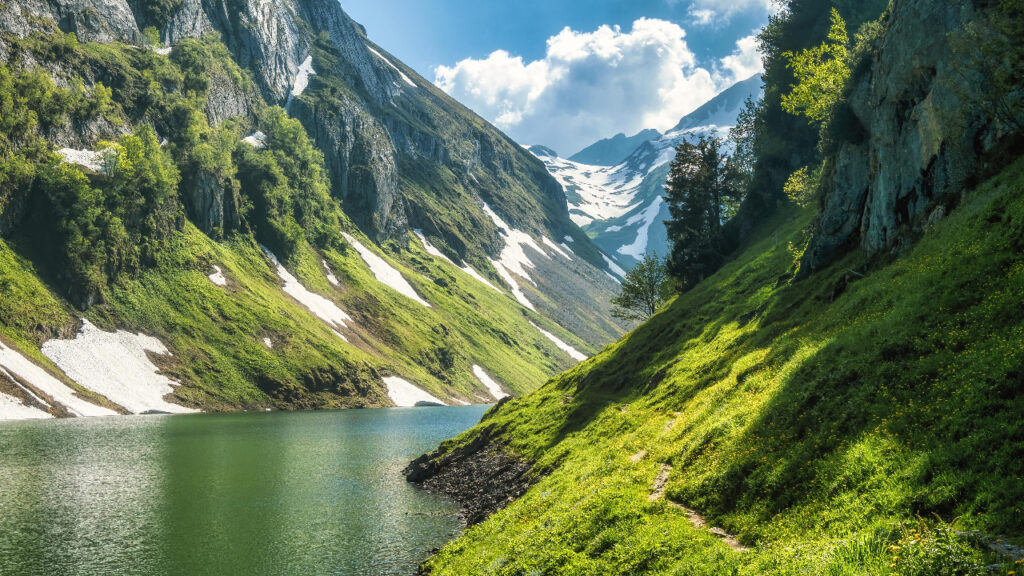
One of the most appealing aspects of the Appenzell Alps is the relationship between the landscape and local culture.
The region does not feel like a mountain destination built solely around tourism.
Traditional agriculture, local architecture, food production, festivals, and customs remain visible throughout the area.
The mountains are part of everyday life.
You can see this connection while walking through Alpine meadows, visiting mountain inns, tasting local cheese, or watching cattle being moved between seasonal pastures.
At the same time, the landscape is genuinely dramatic.
The limestone peaks of the Alpstein rise sharply above the surrounding green hills.
Mountain lakes sit beneath cliffs.
Cable cars climb toward exposed summits.
This combination of traditional culture and spectacular nature gives the region its distinctive character.
Is the Appenzell Alps Worth Visiting?
The Appenzell Alps are absolutely worth visiting.
The region offers many of the experiences people hope to find in Switzerland while providing a more intimate alternative to some of the country’s busiest mountain destinations.
You can see dramatic peaks, walk beside beautiful lakes, ride mountain cable cars, explore caves, visit historic mountain inns, discover traditional villages, and enjoy panoramic views across northeastern Switzerland.
The hiking network is extensive enough to keep outdoor enthusiasts busy for days, while accessible attractions make the region suitable for visitors who prefer shorter walks.
Seealpsee provides an easy introduction.
Ebenalp and Äscher offer iconic scenery.
Säntis provides an unforgettable high-altitude panorama.
Fählensee and Sämtisersee introduce hikers to quieter corners of the Alpstein.
Appenzell itself adds culture and tradition to the journey.
Together, these experiences create a destination that is far more varied than a simple mountain viewpoint.
Final Thoughts on the Appenzell Alps
The Appenzell Alps are a spectacular destination for travelers who want to experience a different side of Switzerland.
The region combines dramatic Alpine peaks with green meadows, clear mountain lakes, traditional villages, historic caves, panoramic cable cars, and a strong local culture.
Seealpsee is an ideal place to begin.
The peaceful lake, surrounding mountains, and relatively accessible hiking route make it one of the most rewarding experiences in the area.
From there, the landscape opens into the wider Alpstein.
Ebenalp and Äscher provide some of the region’s most recognizable views.
Fählensee and Sämtisersee offer quieter mountain landscapes.
Säntis provides an extraordinary panoramic experience from the highest summit of the Alpstein.
And Appenzell itself provides the cultural connection that makes the journey feel distinctly Swiss.
Whether you are an experienced hiker looking for a challenging route, a photographer searching for dramatic landscapes, a family looking for accessible mountain experiences, or a traveler who simply wants to slow down and enjoy nature, the Appenzell Alps have something to offer.
The most important thing is to plan according to the season and current conditions.
Mountain weather can change quickly, and higher routes can be considerably more demanding than they appear from photographs.
Check trail conditions, transportation schedules, and weather before setting out.
Then give yourself time to enjoy the journey.
The true magic of the Appenzell Alps is not found in rushing from one attraction to another.
It is found in the quiet moments between them: a mountain lake reflecting the peaks, a trail crossing a green meadow, a traditional hut appearing around a bend, or a panoramic view opening unexpectedly across the Swiss landscape.
For anyone planning a Switzerland adventure, the Appenzell Alps deserve a place on the itinerary.